


 Italiano
 Français
 Deutsch
 Español
 Português
 Svenska
 Suomi
Suomi
Green Education for Children
Raising Conscious Citizens
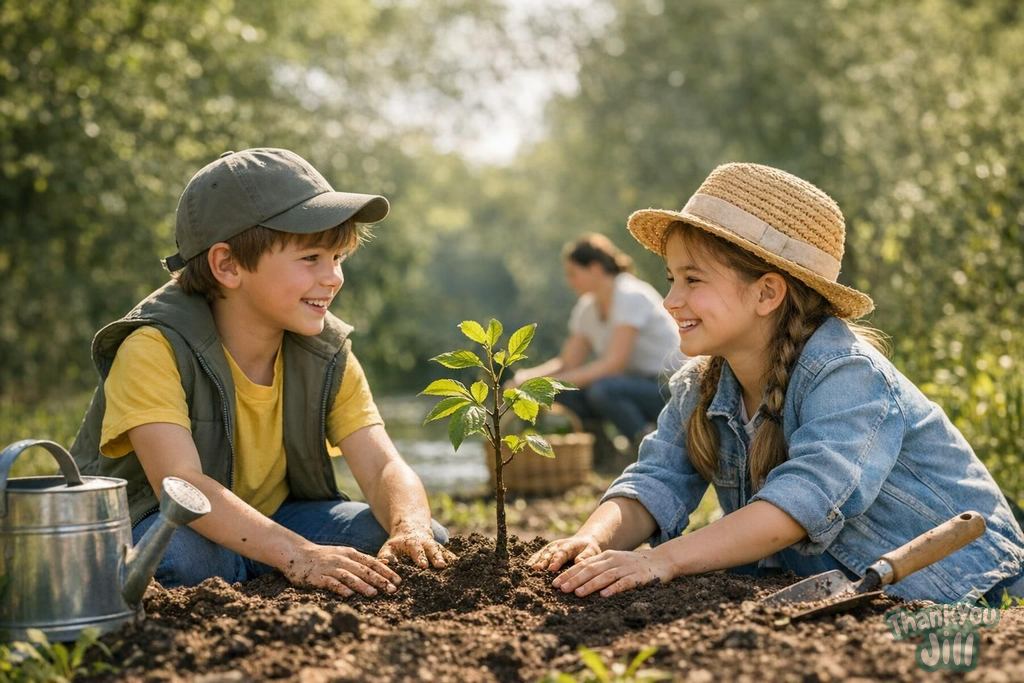
Environmental education for children is one of the longest-term investments a society can make: values and behaviors acquired in childhood tend to persist throughout life. Research in developmental psychology shows that the critical window for forming environmental values is between ages 6 and 12 (school age): during this period, direct experiences with nature, behavioral models from significant adults (parents and teachers), and household habits leave deep and lasting traces on a child's identity. Effective environmental education is not a separate course or curriculum add-on: it's an attitude that permeates daily experiences.
What Works: Research on Environmental Education
Research in environmental psychology (Kahn and Kellert, 2002; Chawla and Cushing, 2007) has identified the factors that most effectively produce an ecological identity in adults: direct experiences with nature in childhood (playing in forests, gardening, observing animals—the so-called "significant life experiences" or SLE), positive environmental behavior models from significant adults (not lectures: the everyday gestures the child observes), cultivated sense of wonder (Rachel Carson, in her book "Sense of Wonder," 1956, proposed that cultivating wonder for nature was the prerequisite for becoming its stewards), active participation in concrete actions (not just knowing but doing: planting trees, sorting waste, cooking with garden ingredients), and narration of a positive future (effective environmental education is not based on fear of the future but on the vision of a better future that the child can help build). The 3 E model: Experience (direct experience with nature), Empathy (developing empathy toward non-human living beings), Efficacy (sense of efficacy: the child feels that their actions make a difference).
Experiences That Leave a Mark: What to Do Concretely
Unstructured time in nature: letting children freely explore natural spaces (even an urban park, even a small garden) without a set schedule is more effective than any structured nature lesson. Spontaneous play in nature builds emotional connection that persists for decades. The garden as a laboratory: growing even just a single pot of tomatoes together teaches children about the life cycle, respect for food, the work of the earth, and patience. It's the most concrete environmental education available. Hands-on citizen science: iNaturalist and BirdNET transform walks into scientific discovery experiences: the child photographs an insect, uploads it to the app, discovers it's called a Seven-Spotted Ladybug and lives in grain fields. This discovery is worth a hundred lessons on biodiversity. Participation in household choices: involve children in sorting waste, choosing food at the market, composting, and saving energy. Not as an obligation but as conscious participation in choices they understand because they're making them.
How to Talk About Climate Change with Children: Without Scaring Them
Eco-anxiety (climate anxiety) is a growing phenomenon among adolescents: fear for the planet's future that transforms into chronic anxiety, sense of powerlessness, nihilism. Climate education must inform without frightening. Principles for talking about climate with children in a healthy way: adapt the message to age (children under 7-8 years old don't yet have the cognitive capacity to process the long-term implications of climate change: talk about nature, caring for the earth, animals, without catastrophism), avoid apocalyptic images and collapse narratives (research by Susan Clayton, Whitman College, shows that exposure to catastrophic messages increases anxiety without increasing motivation to act), talk about concrete solutions and what we're already doing (renewable energy, improving cities, animals recovering: there are many positive stories), and always conclude with an action the child can take (plant a seed, reduce plastic, report an animal on iNaturalist): a sense of efficacy is the antidote to eco-anxiety.
The School's Role in Environmental Education
Italian schools introduced Civic Education as a mandatory subject (33 hours/year) through law 92/2019, with a strong focus on sustainable development and the 2030 Agenda. The ministerial program covers topics like climate change, biodiversity, sustainable consumption, and human rights. Implementation varies greatly between schools: some have systematically integrated environmental education in an experiential way (school gardens, nature parks, citizen science), while others limit it to readings and discussions. How to support environmental education in your child's school: attend school meetings and propose projects (school garden, waste sorting, citizen science with iNaturalist), suggest quality teaching resources to teachers (the INDIRE portal and the MASE website have quality materials on sustainable education), and participate in parent associations (many schools accept proposals for extracurricular environmental workshops).

Don't teach children green doctrine: teach them to wonder. A child kneeling down to watch a ladybug on a leaf, planting a seed and eagerly waiting for it to sprout, hearing the name of a bird from an app that just taught them to recognize it: is building a relationship with the natural world that no lesson could ever replace. Everything else grows from that relationship.
Books and Resources for Children's Environmental Education
Books for children ages 3 to 6: "The Tiny Seed" by Eric Carle (the life cycle, nature), "A Day in the Woods" by Inga Moore (wildlife in detail). Ages 6 to 10: "The Book of Nature" by Nico Mineo (observation of the natural world), "Dear Earth" by Isabella Dalla Vecchia (simple reflection on the environment). Ages 10 to 14: "2030 Agenda: The World We Want" Edizioni Lavoro (SDGs for young people), "The Last Chance" by Greta Thunberg (for older children: youth climate activism). Documentaries accessible to children: "Our Planet" (Netflix), "Chasing Coral" (Netflix: coral in crisis, accessible from age 8), the "Planet Earth" series by the BBC (accessible from ages 8-10). Italian websites and apps for children: Legambiente has sections dedicated to environmental education with freely downloadable materials (legambiente.it/scuole). The ISPRA website has the "ISPRA for Young People" section. The iNaturalist Junior app is specifically designed for primary schools.
Designing a School Garden: A Practical Guide
The school garden is the environmental education project with the best documented impact on forming healthy eating and environmental behaviors. A study published in Appetite (2016) shows that children who participate in school garden programs increase their fruit and vegetable consumption by 20-25% and develop more diverse food preferences. How to start a school garden: identify available space (even just a sunny corner of the schoolyard, raised beds on a terrace), get support from school leadership and at least two teachers who champion the project, seek funding (many municipalities and regions have grants for school gardens, the Ministry of Agriculture has had specific programs, organizations like Slow Food Italy support school gardens), involve children in every phase (planning, planting, care, harvesting, eating in the cafeteria: the complete cycle is the educational message), and document progress with photos and reports (it becomes a citizen science project if you monitor biodiversity in the garden with iNaturalist).
How to Include Environmental Education in Family Routines
The most effective environmental education doesn't happen in classrooms: it happens in daily family habits. Simple practices that build ecological identity: sorting waste together (explaining why, not just imposing it), going to the farmers market with children (meeting the producer, understanding seasons), baking bread or cooking together with fresh ingredients (the connection to produced food), spending time in nature every week even for a short time (the forest near home, the park, the garden), reducing impulse purchases by discussing choices (the child who understands why they're not buying another toy is learning conscious economics), having plants at home to care for together (responsibility toward a living being), choosing vacations with natural components (hiking, nature parks, ecological beaches instead of just theme parks).
Frequently Asked Questions
What are the most effective experiences for developing environmental values in children between 6 and 12 years old?
The most effective experiences include free play in nature, involvement in home or school gardens, using citizen science apps like iNaturalist, and active participation in sustainable practices at home, such as waste sorting.
How do you talk about climate change with children without generating eco-anxiety?
It's important to adapt the message to age, avoid catastrophic images, focus on concrete and positive solutions, and always conclude with practical actions the child can take to feel part of the change.
When is it worth starting a school garden and what benefits does it bring to children?
It's worth starting a school garden when you have adequate space and support from teachers and school leadership. Benefits include a 20-25% increase in fruit and vegetable consumption and the development of healthier and more diverse food preferences.
How do you integrate environmental education into daily family routines?
You can integrate it by involving children in activities like sorting waste with explanations, shopping at farmers markets, cooking with fresh ingredients, weekly nature outings, and caring for plants at home, thus promoting concrete ecological identity.
Latest News




Comments
No comments yet. Be the first!
Leave a comment