


 Italiano
 Français
 Deutsch
 Español
 Português
 Svenska
 Suomi
Suomi
Energy Storage
Home Battery Systems
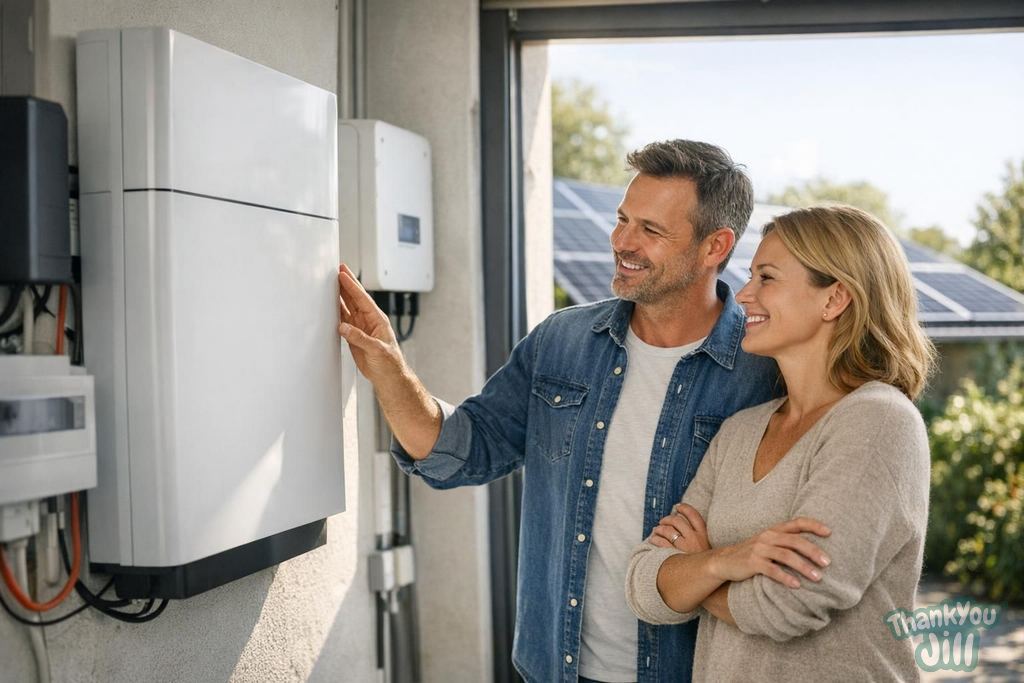
Residential energy storage (home batteries) is the natural complement to solar panels: it solves the main limitation of solar systems, which produce energy during the day when you're often away from home, and don't produce at night when household consumption is high. With a battery, the energy produced during peak daylight hours is stored and used in the evening, increasing self-consumption (the percentage of solar energy you use instead of feeding back to the grid) and reducing dependence on the grid.
How a home storage system works
A home battery sits in your home's energy system between the solar inverter and household loads. When solar production exceeds household consumption: the excess charges the battery up to its maximum capacity, then any further excess goes to the grid. When solar production falls short of household consumption (evening, night, cloudy days): the battery discharges to cover household demand, then you draw from the grid only when the battery is empty. A 10 kWh battery typically covers the evening and nighttime consumption of an average family (3-5 kWh between 6 PM and 7 AM), recharging during the sunny hours of the next day. Typical capacity for residential use: 5-15 kWh for a family of 3-4 people. The choice depends on: evening and nighttime consumption, the number of consecutive cloudy days expected in your area, and whether you have an electric vehicle to charge overnight.
Home battery technologies: comparison
Lithium Iron Phosphate (LFP): the most recommended technology for residential applications in 2024. Advantages: 3,000-6,000 cycle lifespan (10-15 years of useful life with 1 cycle per day), high safety (won't spontaneously catch fire under normal conditions: thermal runaway is very difficult to trigger), low temperature degradation, depth of discharge up to 100% (usable capacity = total capacity). Disadvantages: slightly lower energy density than NMC, slightly higher cost per kWh. Manufacturers: BYD, Pylontech, CATL, Sonnen (LFP). NMC (Nickel-Manganese-Cobalt): high energy density, lower cost per kWh, but higher thermal runaway risk and fewer cycle life (2,000-3,000 cycles). Used by Tesla Powerwall (second generation), LG Energy Solution RESU. Sodium-Ion (Na-Ion): emerging lithium-free and cobalt-free technology. Very safe and potentially less expensive. Still in the early stages of commercial scaling. Promising for the future. Lead-Acid (AGM/GEL): mature and very economical technology. But enormous weight, limited depth of discharge (50%), short useful life (500-800 cycles), requires maintenance. Suitable only for off-grid applications in remote areas where cost is prioritized over performance.
When a battery makes an economic difference: favorable cases
A home battery is economically advantageous when: you already have a solar installation and want to maximize self-consumption, the nighttime electricity rate is significantly higher than the daytime rate (F1/F2/F3 tariffs: the battery charges during the day with cheap or free solar electricity and discharges in the evening/night, avoiding peak rates), you have an electric vehicle to charge overnight: the battery discharges into the car and recharges the next day from solar, you want resilience against blackouts (batteries with off-grid or backup functions continue to power critical loads even during a grid outage). A battery is not yet economically advantageous as a standalone investment (without solar) under current average Italian electricity rates. Its value lies in complementing a solar installation, not as an independent investment.

Without a battery, your solar system gives away 70% of the energy it produces to the grid at €0.10/kWh. With a battery, you use that same energy in the evening at €0.30/kWh in avoided costs. The math is clear: a battery is worth it when the price you pay to the grid is much higher than what you get for feeding it back. And it almost always is.
Most popular home battery brands in Italy
BYD Battery-Box Premium: among the best-sellers in Italy in 2024. Modular LFP technology (you can start with 5 kWh and add modules up to 25 kWh). 10-year warranty. Pylontech: reliable LFP battery, widely used by installers, competitive price, modular. Sonnen eco: German brand focused on longevity and quality (10-15 year warranty), all-in-one system with integrated inverter. Premium price. Tesla Powerwall 3: the most media-famous battery. 13.5 kWh, NMC, integrated inverter. Good performance but watch out for NMC technology. Huawei LUNA: LFP battery integrated with Huawei inverter. Excellent integrated system if you're already choosing a Huawei solar inverter. Solarwatt MyReserve: German battery with 10 years of unlimited cycle warranty. How to compare: don't just look at the installed cost per kWh, but: cost per kWh of total capacity over useful life (total guaranteed kWh = nominal kWh x guaranteed cycles), quality of the BMS (Battery Management System), warranty and manufacturer track record, compatibility with your solar inverter.
Virtual Power Plants and aggregated batteries
One of the most interesting frontiers in residential energy storage is the aggregation of batteries into "virtual power plants." Many home batteries connected together and managed by an aggregator (the "virtual power plant operator") can respond to grid balancing requests (increase or decrease grid draw/feed in milliseconds) just like a traditional power plant would. The battery owner receives economic compensation for this availability (typically €50-150/year for a 10 kWh battery) with no significant impact on normal household use. Examples in Italy: participation programs in the spot market through aggregators like Zephyra (Terna), Tesla Powerwall initiatives in the UK and Germany (expanding across Europe). This evolution transforms every home battery owner from a passive consumer into an active participant in the energy market: one of the pillars of the decentralized energy system of the future.
Correct battery sizing: practical calculation
Calculating optimal battery sizing: gather the data: average nighttime household consumption (6 PM to 7 AM: typically 30-40% of total daily consumption) and vehicle charging consumption (if applicable). Battery goal: cover evening and nighttime consumption without drawing from the grid on 90% of nights (exclude the longest periods of cloudiness). For a family with total consumption of 15 kWh/day (Italian average): consumption 6 PM-7 AM = 5-6 kWh, ideal battery: 7-8 kWh of usable capacity (accounting for losses and safety reserve: 15-20% more than net capacity). Don't oversizing excessively: a battery that's too large for your needs won't fully charge every day (partial cycles) and degrades more slowly, but doesn't add proportionally to economic benefit. The energy simulation done by your installer with your actual consumption data is the most accurate way to size your battery correctly.
Frequently Asked Questions
When is it worth installing a home battery for a solar installation?
It's worth installing a home battery if you want to increase self-consumption from 30% to 70%, especially if the nighttime electricity rate is higher than the daytime rate, you own an electric vehicle to charge at night, or you want resilience in case of blackouts.
What are the advantages of LFP technology compared to other home batteries?
LFP batteries offer long lifespan (3,000-6,000 cycles), high safety with low fire risk, low thermal degradation, and depth of discharge up to 100%, making them ideal for residential use despite a slightly higher cost and lower energy density compared to NMC.
How do you correctly size a home battery for solar use?
Sizing is based on average nighttime consumption (6 PM-7 AM) and electric vehicle charging if applicable. For a family with total consumption of 15 kWh/day, you need a battery of about 7-8 kWh usable, accounting for losses and safety reserve, to cover 90% of nights without drawing from the grid.
What happens if you oversize a home battery too much?
An oversized battery won't fully charge every day, causing partial cycles that slow degradation but don't increase economic benefit proportionally, making the investment less efficient compared to sizing based on actual consumption.


Latest News




Comments
No comments yet. Be the first!
Leave a comment