


 Italiano
 Français
 Deutsch
 Español
 Português
 Svenska
 Suomi
Suomi
E-waste
Proper disposal of electronics
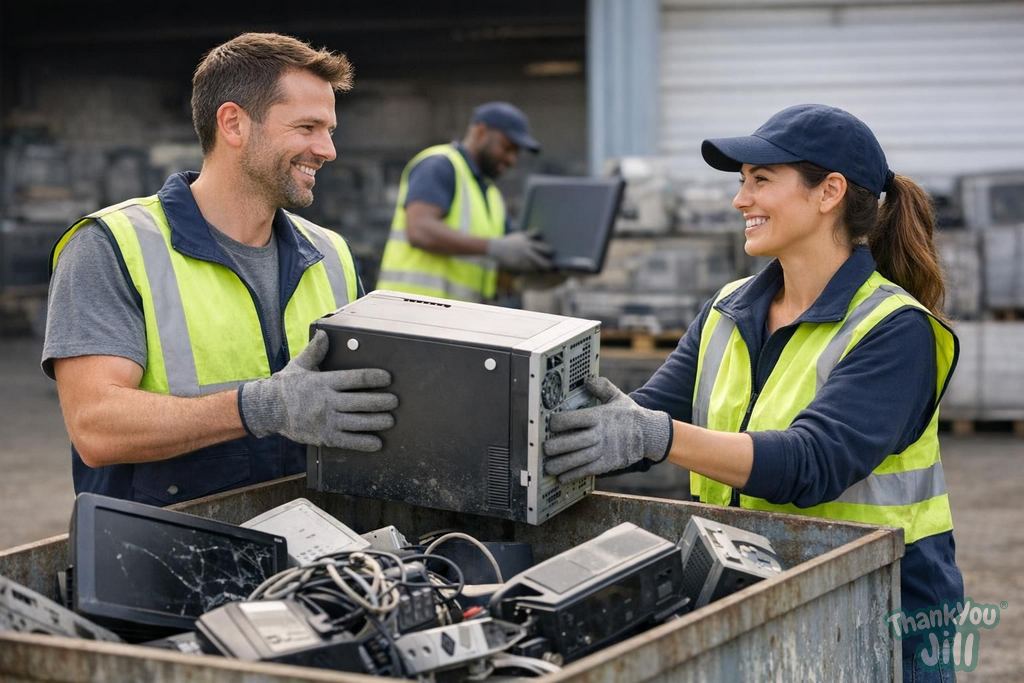
Waste electrical and electronic equipment (WEEE, or e-waste) represents the world's fastest-growing waste stream. According to the Global E-waste Monitor 2020, 53.6 million metric tonnes of WEEE were generated globally in 2019, a 21% increase in just five years. Only 17.4% of this WEEE is properly collected and recycled. The rest ends up in landfills, is incinerated, or is illegally exported to developing countries where it's "recycled" using informal methods that expose workers to extremely toxic substances.
What WEEE contains: why recycling matters
Electronic devices contain a unique combination of valuable materials and hazardous substances. Valuable materials found in electronics: gold (in printed circuit connections—a smartphone contains approximately 0.03 grams of gold, equivalent to €1.50–2 at current prices), silver (in quality circuits), platinum and palladium (in catalysts and some precision components), copper (in cables and circuits—significant quantities), cobalt and lithium (in lithium-ion batteries). One million recycled phones contain roughly 35 kg of gold, 350 kg of silver, 16 kg of palladium, and 15 tonnes of copper. The value of materials in unrecycled WEEE globally is estimated at $57 billion annually. Hazardous substances found in electronics: lead (in solder and old CRT screens), mercury (in flat displays and lamps), cadmium (in Ni-Cd batteries), hexavalent chromium (in surface treatments), brominated flame retardants (BFR—in case plastics). If released into landfills, these substances contaminate soil and groundwater for decades.
Italian and European WEEE regulations
In Europe, the WEEE Directive (2012/19/EU, transposed into Italian law via D.Lgs. 49/2014) establishes: collection targets (65% of the average weight of devices placed on the market over the preceding 3 years), producer responsibility (EPR: Extended Producer Responsibility)—electronics manufacturers are responsible for funding collection and recycling systems through Collective Systems (such as Remedia, Erion, ERP), the 1-for-1 rule: when you buy a new appliance, the retailer must accept the old equivalent for free, the 1-for-0 rule: for small WEEE (under 25 cm), stores larger than 400 m² must collect them without requiring a purchase. In practice: you can bring your old phone, dead batteries, fluorescent bulbs, headphones, and chargers to supermarkets or electronics stores without buying anything, and they must accept them for free.
Where to take WEEE in Italy: a practical guide
Your municipality's recycling centre: accepts all WEEE for free. It's always the most comprehensive solution. Find yours: search online for "recycling centre + [your municipality name]" or visit your municipality's waste management provider website. Electronics stores (Euronics, Mediaworld, Unieuro, Expert): required to accept small WEEE (under 25 cm) without purchase. For large WEEE, they accept only with an equivalent purchase. Italian Post Office: has launched a "free collection" programme for small WEEE in partnership with Remedia. Ask at your local post office. Special collection campaigns: many municipalities periodically organize extraordinary WEEE collection days. Check your municipality's website. Manufacturers with take-back programmes: Apple (Apple Trade In), Samsung, Dell, and HP offer collection and recycling programmes for used devices. They often provide credit toward a new device.

Your old phone is a goldmine of gold, silver, copper, and cobalt. Throwing it in the general waste bin means sending all of this to a landfill and forcing the extraction of virgin minerals for your next phone. Electronics retailers are legally required to take it back for free. Time required: two minutes during your next shopping trip. The result: fewer mines, fewer children working in the Democratic Republic of Congo for cobalt.
How to extend the life of electronic devices: prevention before recycling
The best WEEE is the kind that doesn't exist. Before throwing away an electronic device: repair it (iFixit.com has guides for nearly every smartphone, tablet, and laptop model; replacing a smartphone battery costs €50–80 versus €800–1,500 for a new one), consider selling or donating it (Swappie, BackMarket for refurbished devices; donation to schools, nonprofits, or families in need), refurbish it (many older laptops with sufficient hardware for web browsing and productivity can be regenerated by installing an SSD and a lightweight operating system like Linux). Only when repair, reuse, and refurbishment options are exhausted: take the device to proper recycling.
The problem of exported e-waste: global impact
A significant portion of WEEE that Europeans hand over for "recycling" actually ends up exported to countries like Ghana (Agbogbloshie in Accra—one of the world's largest informal e-waste sites), Nigeria, India, and Pakistan. At these sites, workers (often children) dismantle devices using informal methods (burning cables to recover copper, using nitric acid to recover gold), exposing themselves to lead, mercury, and cadmium at levels tens of times higher than safety limits. Related illnesses (cancer, neurological disorders, kidney damage) are documented in these populations. How to reduce the risk of fuelling this market: choose manufacturers with certified take-back programmes (not just supermarket bins), prefer certified Collective Systems recognized by ARI (Italian Recyclers Association), choose devices with high repairability ratings (Fairphone: the world's most repairable smartphone).
The future of electronics recycling: emerging technologies
Electronics recycling is technically complex due to the density and variety of materials in confined spaces. Emerging technologies promise to improve recovery yields. Advanced hydrometallurgy: chemical processes using selective reagents (ionic liquids, bioacids) that recover specific metals with yields exceeding 95% versus the 60–70% of traditional pyrometallurgical processes (smelting). Design for Disassembly (DfD): some manufacturers (Fairphone, Framework Laptop) design devices to be easily disassembled and repaired. Framework Laptops feature modular components (keyboard, screen, battery, motherboard) that are easily replaceable without specialized tools. Lithium battery recycling: demand for lithium, cobalt, and nickel for EV batteries and energy storage is making used battery recycling economically viable. Companies like Northvolt (Sweden), Umicore (Belgium), and Li-Cycle (Canada) are building dedicated EV battery recycling gigafactories with material recovery exceeding 95%.
Frequently asked questions
Why is it important to properly recycle electronic waste (WEEE)?
Recycling WEEE is essential for recovering precious metals like gold, silver, and copper, reducing the extraction of virgin minerals. It also prevents the release of toxic substances such as lead and mercury, preventing serious environmental and health damage.
How can I properly dispose of small electronic devices without buying a new product?
Electronics stores with an area larger than 400 m² are required to collect small WEEE (under 25 cm) for free without requiring a purchase. You can also take them to municipal recycling centres or participate in special collection campaigns.
When is it worth repairing or refurbishing an electronic device instead of recycling it?
It's worth repairing or refurbishing a device when you can extend its life at a lower cost than buying a new one—for example, by replacing the battery or upgrading components. This reduces e-waste production and environmental impact.
How do I recognize reliable manufacturers and recycling systems to avoid illegal e-waste exports?
Choose manufacturers with certified take-back programmes and collective systems recognized by organizations like ARI. These guarantee responsible recycling, preventing WEEE from ending up in countries using dangerous informal methods that harm health.


Latest News




Comments
No comments yet. Be the first!
Leave a comment