


 Italiano
 Français
 Deutsch
 Español
 Português
 Svenska
 Suomi
Suomi
Hydration for Children
How much and when to have them drink
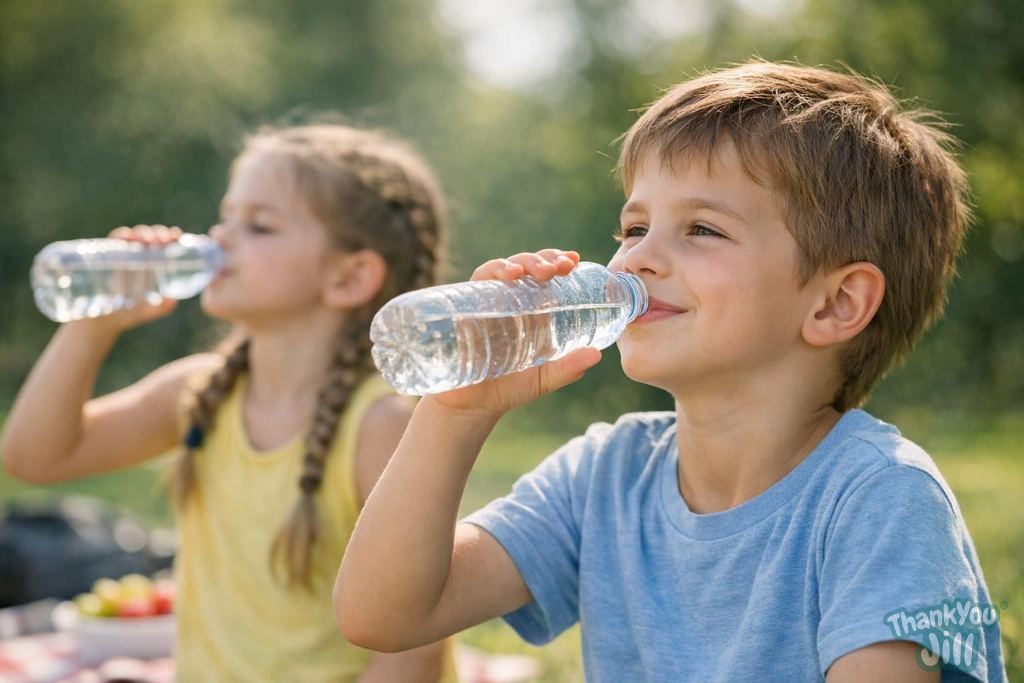
Children are not miniature adults. Their bodies have physiological characteristics that make them more vulnerable to dehydration: they have a larger body surface area relative to weight, a faster metabolism, and often don't recognize or effectively communicate thirst. When a child says they're thirsty, they're already dehydrated. When they don't say it, they might be anyway.
How much water do children need by age
The EFSA (European Food Safety Authority) provides clear guidelines. Children ages 1 to 2: approximately 1.1–1.2 liters per day of total fluids (including milk, soups, fruit). Ages 2 to 3: 1.3 liters. Ages 4 to 8: 1.6 liters. Ages 9 to 13: 1.9–2.1 liters (boys slightly more). Teenagers: 2–2.5 liters, like adults.
These are average values. In summer, with intense physical activity or during illnesses with fever and diarrhea, fluid needs increase significantly.
Infants and early childhood
During the first six months of life, breast milk or formula contains all the water a baby needs. Don't give additional water to infants under six months: it can dangerously dilute mineral salts in the blood (dilutional hyponatremia).
Between six months and one year, with the introduction of solid foods, you can start offering small amounts of plain water (50–100 ml per day). It's not necessary while breastfeeding or using formula, but it's an excellent way to start getting them used to the taste of water.
Why children forget to drink
Play completely absorbs children's attention. When they're immersed in an activity, they ignore body signals like thirst, hunger, even tiredness. This is normal and healthy. But it means adults must be guardians of the child's hydration—don't expect them to spontaneously ask for water.
In school settings, many children drink very little because they don't want to get up during class, don't want to go to the bathroom away from classmates, or simply forget. Having a water bottle on their desk solves much of the problem.
Signs of dehydration in children
Dark yellow urine or little urine during midday hours. Dry mouth and chapped lips. Crying with few or no tears. Child unusually irritable, tired, or sleepy without reason. Skin that doesn't immediately bounce back when pinched lightly.
In infants: the anterior fontanelle (the soft spot on the head) appearing sunken, dry diapers for more than six hours. These are serious signs requiring immediate rehydration and, if they persist, urgent medical attention.
Illness and hydration: when it's an emergency
Fever, vomiting, and diarrhea are the most common causes of acute dehydration in children. With high fever, the child loses fluids through sweat and accelerated breathing. With vomiting and diarrhea, losses can be very rapid.
During illnesses with these symptoms: offer fluids frequently, in small amounts (a teaspoon every 5 minutes if the child is vomiting). Oral rehydration solutions (available at pharmacies) are more effective than plain water because they contain electrolytes. Don't use sugary sports drinks: sugar worsens diarrhea.
How to build a water-drinking habit
Children learn by imitation. If they see parents drinking water regularly, they do too. Make water visible and accessible: a colorful water bottle or one with their favorite characters always within reach, a glass on the table during meals, a bottle in the fridge at child height.
Don't use fruit juices, sugary drinks, or sodas as a substitute for water. They contain sugars that, beyond harming teeth and metabolism, don't hydrate as effectively as water. The right habit is built in the early years: the longer you wait, the harder it is to change.
Sports and physical activity: intensified hydration
During intense physical activity or sports, children lose fluids through sweat in proportion similar to adults. Before activity: 150–200 ml of water. During: sips every 20 minutes. After: complete rehydration. If your child plays competitive sports, work with the coach to develop a structured hydration plan.

A well-hydrated child is more focused, calmer, and less fussy. Water isn't just physical health: it's the fuel for a brain that learns and grows every day.
Personalized water bottle: the game-changer for school hydration
Let your child choose their water bottle. With their favorite characters, in their favorite color, with a cap they can open themselves. When a child has something that feels "theirs," they use it. Put it in their backpack every morning, fill it with fresh water. Make "filling the water bottle" a morning ritual you do together.
Making water more interesting without sugar
If your child doesn't love plain water, try: a slice of lemon or orange in the water, a few mint leaves, a few crushed blueberries that color it slightly. No sugar, but a different flavor that sparks curiosity. Light sparkling water can be appealing to older children (over three years old).
The hydration game
With younger children, turn drinking water into a game. Count glasses together throughout the day. Draw a "hydration thermometer" on paper and move the marker every time they drink. Give a star or small symbolic reward for each day they reach the goal. Learning through play works better than any obligation.
Warning signs you shouldn't ignore
If you notice in your child: very dark urine for more than a day, crying without tears, constantly dry mouth, unusual irritability without fever, confusion or unusual sleepiness: offer fluids right away and, if they don't improve quickly, contact your pediatrician. Dehydration in young children can worsen in just a few hours.
Frequently Asked Questions
What is the recommended amount of water for children based on age?
According to the EFSA, children ages 1 to 2 need approximately 1.1–1.2 liters of fluids per day, ages 2 to 3 need 1.3 liters, ages 4 to 8 need 1.6 liters, ages 9 to 13 need 1.9–2.1 liters, while teenagers need 2–2.5 liters, including all fluid sources.
How can you tell if a child is dehydrated?
Signs of dehydration include dark or scanty urine, dry mouth, crying without tears, unusual irritability or sleepiness, and skin with poor elasticity. In infants, a sunken anterior fontanelle and dry diapers for more than six hours are serious signs requiring medical attention.
When is it advisable to use oral rehydration solutions in children?
Oral rehydration solutions are recommended during high fever, vomiting, or diarrhea to quickly restore fluids and electrolytes. They are more effective than plain water and should not be replaced by sugary sports drinks, which can worsen diarrhea.
How do you build a water-drinking habit in children?
To get children used to drinking water, make it visible and accessible with personalized water bottles and colorful cups. Parents should set an example and turn drinking into a daily game or ritual, avoiding juices or sugary drinks as substitutes.


Latest News




Comments
No comments yet. Be the first!
Leave a comment