


 Italiano
 Français
 Deutsch
 Español
 Português
 Svenska
 Suomi
Suomi
Osteoporosis
Calcium, Vitamin D, and K2
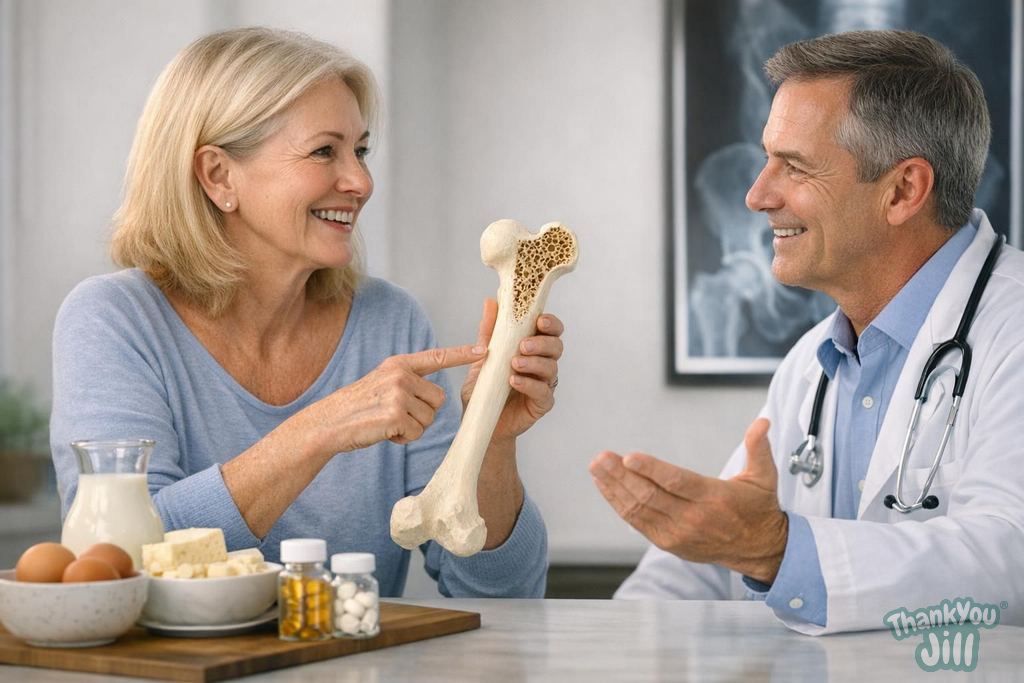
Osteoporosis is a systemic skeletal disease characterized by reduced bone mineral density and deterioration of bone microarchitecture, resulting in an increased risk of fractures. It affects 25-30% of women over 65 years old and 10-15% of men. Osteoporotic fractures (femur, vertebrae, wrist) cause chronic pain, disability, loss of independence, and in the case of hip fracture, a 20-30% mortality risk within one year in elderly patients. The nutritional approach does not replace medication when necessary, but it is the foundation upon which all therapy is built.
The nutritional triad for bone health: calcium, vitamin D, and K2
Calcium is the primary mineral in bone matrix: 99% of body calcium is in the bones. But calcium alone isn't enough: ingested calcium must be absorbed (vitamin D regulates intestinal absorption) and must deposit in bone rather than soft tissues (vitamin K2 activates osteocalcin, which directs calcium toward bone). The triad works synergistically: without vitamin D, dietary calcium is not absorbed; without vitamin K2, absorbed calcium can deposit in arteries (arterial calcification) instead of bones.
Calcium: daily requirements and food sources in older adults
The calcium requirement after age 65 is 1,200 mg per day for women and 1,000-1,200 mg for men (higher than for younger adults). Food sources: dairy products (200 mg per 200 ml serving of milk, 200-250 mg per 125g of yogurt, 300-400 mg per 40g of Parmesan), canned sardines with bones (320 mg per 100g: excellent source of calcium and omega-3), tofu with calcium sulfate (350 mg per 100g), cooked broccoli (40 mg per 100g: higher bioavailability than dairy), kale (150 mg per 100g, high bioavailability). Intake should be distributed throughout the day: intestinal absorption saturates above 500 mg per dose. Two separate 600 mg doses are better than a single 1,200 mg dose.
Vitamin D: the regulator of calcium absorption
Without adequate vitamin D (levels above 30 ng/ml, ideally 40-60 ng/ml), intestinal calcium absorption drops from 30-40% to 10-15%. Calcium supplementation without vitamin D is largely ineffective. The vitamin D requirement in older adults is 800-2,000 IU per day (the 800 IU dose recommended by some guidelines is likely insufficient to achieve adequate blood levels in most elderly individuals). Check your serum levels and adjust the dose: the target is 40-60 ng/ml. Many older adults need 3,000-4,000 IU per day to reach it.
Vitamin K2: the anti-calcification nutrient
Vitamin K2 (particularly the MK-7 form, menaquinone-7) activates osteocalcin (which incorporates calcium into the bone matrix) and matrix Gla protein (MGP, which inhibits arterial calcification). Large-scale Dutch studies (Rotterdam Study) show that higher vitamin K2 intake is associated with: lower risk of arterial calcification, better bone density, lower risk of vertebral fractures. Food sources of K2 MK-7: natto (fermented Japanese soy product: 1,000 mcg per 100g, by far the richest source), fermented cheeses (Parmesan, Gouda: 15-80 mcg per 100g), butter from grass-fed animals (15 mcg per 100g), egg yolk (5-10 mcg). In Italy, natto is not traditionally consumed: supplementation with MK-7 (100-200 mcg per day) is a practical strategy for those who don't eat adequate amounts of fermented cheeses.
Magnesium and bone health
Magnesium is often overlooked in discussions about osteoporosis, but it's present in bone structure (approximately 50% of body magnesium is in bones) and regulates vitamin D receptor activity. Studies show that low magnesium intake is associated with reduced bone density and increased fracture risk. The magnesium requirement in older adults is 300-420 mg per day: nuts, pumpkin seeds, dark leafy greens, whole grains, avocado.

Osteoporosis doesn't develop in a year: it develops over decades of insufficient calcium, deficient vitamin D, sedentary lifestyle, and smoking. And it's not cured with a single supplement: it's managed with the calcium-D-K2 triad, physical exercise, and medication when necessary. Every serving of yogurt, every sardine, every walk in the sun is a brick in the bone that will support you through future falls.
DEXA scan: when to do it and how to interpret it
DEXA (dual-energy X-ray absorptiometry) measures bone mineral density. Indications for testing: all women over 65 years old (at least once), men over 70, adults with risk factors (smoking, chronic corticosteroid use, history of fractures, family history). The resulting T-score: above -1 is normal, -1 to -2.5 is osteopenia (weakened bone but not yet osteoporosis), below -2.5 is osteoporosis. With T-score below -2 or with fracture history: your doctor will consider pharmacological therapy (bisphosphonates, denosumab, romosozumab). DEXA is repeated every 1-2 years to monitor treatment response.
Weekly nutrition plan for bone health
Every day: three servings of dairy or calcium equivalents (Greek yogurt + cheese + milk or alternative), vitamin D 2,000-3,000 IU (supplement), vitamin K2 MK-7 100 mcg (supplement or abundant aged cheeses), magnesium 300-400 mg (nuts + leafy greens). Three times a week: canned sardines with bones (calcium + omega-3 + vitamin D), dark leafy greens (broccoli, kale). Physical activity: at least 30 minutes of walking daily plus two strength training sessions (mechanical impact on bone stimulates mineralization).
Calcium in supplements: when and which type
If you can't reach 1,200 mg of calcium through diet alone: calcium citrate is preferable to calcium carbonate for older adults with reduced gastric acidity (very common after age 65 due to atrophic gastritis). Citrate doesn't require stomach acid for absorption. Maximum dose per intake: 500 mg (absorption saturates above this threshold). Don't take calcium and vitamin D together: excess supplemental calcium (above 1,500 mg per day) is associated in some studies with increased cardiovascular risk. Get calcium primarily from food; supplement only the remaining deficit.
Frequently Asked Questions
What is the role of vitamin K2 in osteoporosis prevention?
Vitamin K2 activates osteocalcin, which directs calcium into bones, and MGP protein, which prevents arterial calcification. Without K2, absorbed calcium can deposit in arteries rather than bones, increasing the risk of calcifications and fractures.
How can I tell if I'm getting enough vitamin D to improve calcium absorption?
It's important to maintain vitamin D serum levels between 40-60 ng/ml. In older adults, 3,000-4,000 IU per day is often needed to reach these values. A blood test can confirm whether your intake is adequate to optimize calcium absorption.
When should I supplement calcium and which type should I choose?
Calcium supplementation is recommended if your diet doesn't reach 1,200 mg daily. For older adults with reduced gastric acidity, calcium citrate is preferable as it's more easily absorbed. The maximum dose per intake is 500 mg, distributed in multiple doses for better absorption.
How much does physical activity affect bone health in osteoporosis?
Physical activity, such as walking 30 minutes daily and doing strength exercises twice a week, stimulates bone mineralization through mechanical impact. This helps maintain or improve bone density and reduces fracture risk.

Latest News




Comments
No comments yet. Be the first!
Leave a comment