


 Italiano
 Français
 Deutsch
 Español
 Português
 Svenska
 Suomi
Suomi
Hydration in Older Adults
Preventing Dehydration
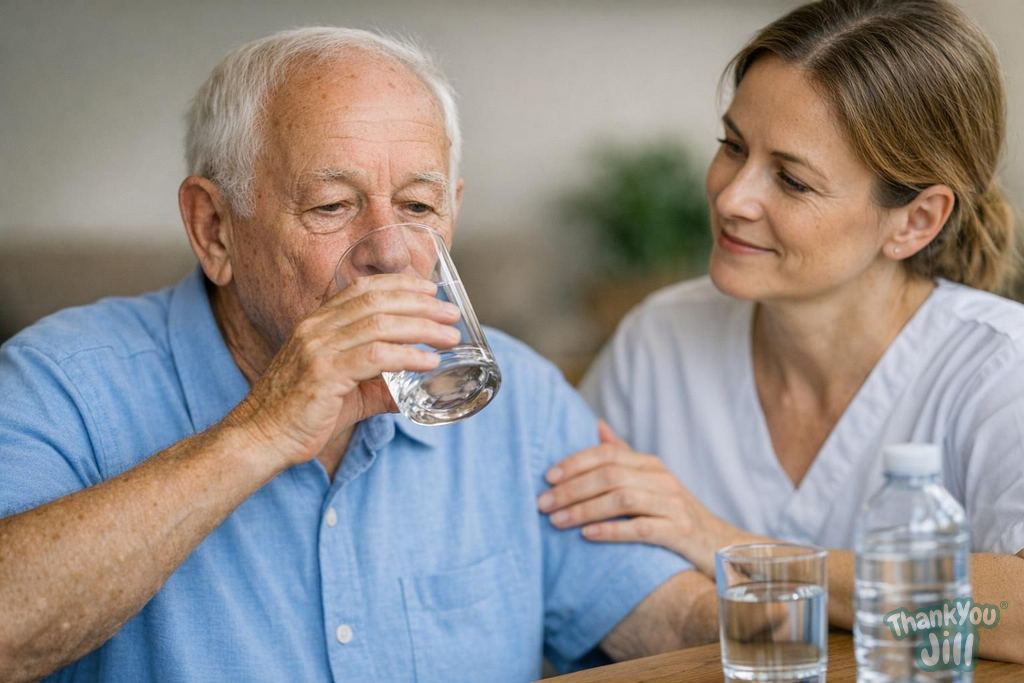
Dehydration is one of the most common and most underestimated nutritional problems in older adults. It affects up to 20-30% of non-institutionalized seniors and 40-50% of those in care facilities. It's not simply a matter of feeling thirsty and drinking less: it's a structural physiological vulnerability that worsens with age. And the consequences are serious: acute mental confusion (delirium), increased risk of falls, recurrent urinary tract infections, chronic constipation, reduced cognitive performance, and worsening of nearly all existing chronic diseases.
Why Older Adults Dehydrate More Easily
Reduced sense of thirst: the physiological thirst mechanism becomes blunted with age. Older adults don't feel thirsty even when they're already 2-3% depleted of fluids: the threshold for activating thirst is raised. Reduction in total body water: fat mass (which contains little water) increases with age while muscle mass (rich in water) decreases. The aging body has fewer water reserves to draw from. Reduced kidney function: aging kidneys concentrate urine less efficiently: they lose more water for the same waste excretion. Diuretic medications: very common in older adults for hypertension and heart failure, they increase urinary water losses. Reduced mobility: getting up to drink becomes more difficult. Fear of nighttime urination: many seniors intentionally reduce evening fluids to avoid nighttime bathroom trips (fall risk), worsening dehydration.
How to Recognize Dehydration in Older Adults
Classic signs of dehydration (intense thirst, dark urine, reduced urination) appear late in older adults due to reduced thirst sensation. Early signs often go unrecognized: mental confusion or acute cognitive decline (the most common sign of dehydration in seniors: the brain is very sensitive to dehydration), increased constipation, unusual weakness, reduced blood pressure when standing (orthostatic hypotension, a cause of falls), dark yellow or orange urine (rather than pale yellow). Practical test: pinch the skin on the back of your hand between thumb and index finger and release. If it immediately returns to normal: well hydrated. If it takes more than 2 seconds to return to place: likely dehydration.
Fluid Requirements for Older Adults: How Much and What
Older adults need approximately 1.5-2 liters per day of total fluids (water + beverages + fluids in food). On hot days or with fever: increase to 2-2.5 liters. Not all needs to come from plain water: tea, broth, milk, fruit juice (in moderate amounts), sparkling water, herbal infusions: all fluids count. A very effective strategy for older adults who forget to drink: pre-filled glasses of water placed in visible spots around the house (on the dining table, on the nightstand, on the living room table). The visibility of the glass acts as a physical reminder.
Best Beverages for Older Adults
Water: the foundation. Still or sparkling (sparkling is sometimes preferred for taste and refreshing effect). Flavor with lemon slices, mint leaves, cucumber slices to make it more appealing. Green or black tea: hydrating, with additional beneficial effects (polyphenols). Watch out for excess caffeine (diuretic) and tannins (reduce iron absorption). Vegetable or chicken broth: excellent source of fluids + electrolytes (sodium, potassium), very popular with older adults. Herbal infusions (chamomile, lemon balm, fennel, hibiscus): hydrating, pleasant, caffeine-free. Milk and liquid dairy products: contribute to fluid intake and add calcium and protein. Fruit juice: limited to 150-200 ml per day (high sugar content). What to avoid: alcohol (diuretic, reduces hydration), sugary drinks in large quantities, energy drinks (contraindicated at all ages but especially in older adults).

An older adult who doesn't drink enough isn't doing so out of negligence: they simply don't feel thirst the way they should. Managing hydration is one of the most important tasks for anyone caring for an older person: don't wait for them to ask for a drink. Bring the glass, place it in sight, remind them. Water is the most economical and most effective medicine that exists for confusion in a dehydrated older adult.
The Scheduled Glass System: Hydration Without Forgetting
For older adults who forget to drink: set a reminder every 2 hours on a smartphone or smartwatch. Prepare 6-8 glasses of water in a visible line on the kitchen counter in the morning: goal is to empty them all by evening. Link drinking to existing routines: a glass of water upon waking (before coffee), one with each medication, one before each meal, one with each snack, one before bed. This schedule guarantees 1.5-2 liters per day without having to think about it: it's integrated into already-existing routines.
How to Increase Fluids Through Food
Many older adults with reduced appetite for liquids can increase hydration through water-rich foods: soups and broths (200-300 ml of fluids per serving + nutrients), fresh fruit (watermelon 91% water, strawberries 91%, oranges 87%, peaches 89%), raw or cooked vegetables (cucumber 96%, tomatoes 94%, zucchini 95%), ice cream and sorbets (not ideal nutritionally but excellent for hydrating older adults who refuse water), liquid yogurt, gelatin water (for older adults with swallowing difficulties who can't safely swallow liquids). This approach is particularly useful in summer and for people with difficulty swallowing liquids.
Dehydration and Medications: An Important Interaction
Many medications commonly prescribed to older adults interact significantly with hydration. Diuretics (furosemide, hydrochlorothiazide): increase urinary water and potassium losses. It's essential to maintain adequate hydration and monitor potassium levels. Osmotic laxatives (macrogol): require abundant water to work; used without adequate hydration they worsen dehydration. ACE inhibitors and sartans (antihypertensives): reduce kidney filtration and require adequate hydration. In case of acute illness with vomiting or diarrhea: dehydration in elderly patients taking these medications can lead to acute kidney failure rapidly. Always inform the doctor about how much fluid your elderly family member is able to drink, especially during acute illnesses.
Frequently Asked Questions
How can you tell if an older adult is dehydrated without the classic sensation of thirst?
In older adults, thirst is often absent or delayed. Early signs of dehydration include acute mental confusion, unusual weakness, constipation, dark urine, and orthostatic hypotension. A practical test is to pinch the skin: if it returns slowly to place, there may be dehydration.
What is the recommended daily fluid intake for an older adult and how can it be increased easily?
Older adults should consume approximately 1.5-2 liters of fluids per day, increased to 2-2.5 liters in hot weather or with fever. To facilitate intake, you can prepare visible glasses of water around the house and link drinking to daily routines such as meals or medication intake.
Which beverages are best for maintaining good hydration in older adults?
Still or sparkling water is the foundation, optionally flavored. Green or black tea in moderation, vegetable or chicken broth, caffeine-free herbal infusions, milk and liquid dairy products are excellent choices. It's better to limit fruit juices, avoid alcohol, sugary drinks, and energy drinks.
How do common medications in older adults affect dehydration and what should be done?
Medications such as diuretics, osmotic laxatives, ACE inhibitors, and sartans increase the risk of dehydration or require adequate hydration. It's essential to monitor fluid intake, especially during acute illnesses, and inform the doctor if the older adult drinks little.

Latest News



Comments
No comments yet. Be the first!
Leave a comment