


 Italiano
 Français
 Deutsch
 Español
 Português
 Svenska
 Suomi
Suomi
Leftovers
Creative zero-waste recipes
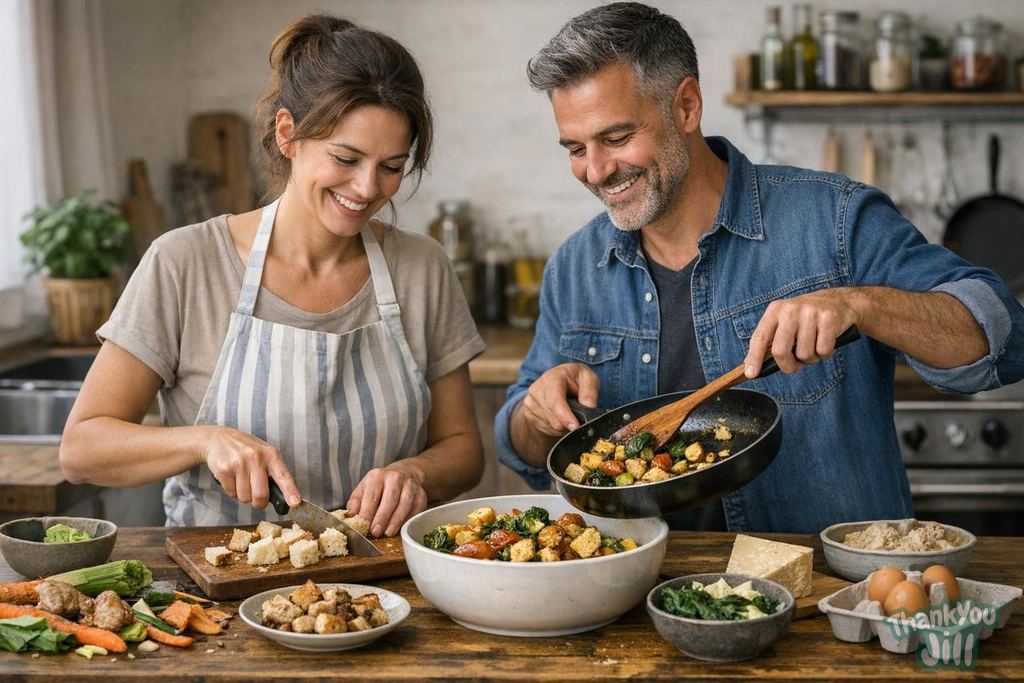
The history of Italian cuisine is, in large part, the history of leftovers transformed into masterpieces. Tuscan ribollita comes from leftover minestrone reheated multiple times ("ribollita," literally reheated). Panzanella is yesterday's stale bread with today's tomatoes. Pasta frittata is last night's leftover pasta with eggs. Risotto al salto is cold risotto compacted into a patty and browned in butter. These aren't makeshift dishes—they're dishes with a story, a technique, a philosophy that honors food instead of wasting it.
The method: how to think of leftovers as ingredients
The key to zero-waste cooking is a shift in perspective: leftovers aren't "what's left over" to set aside with guilt, but "ready-made ingredients" to build from. The three-question technique: 1. What do I have in the fridge that needs to be used today or tomorrow? 2. How can I change the format, temperature, or cooking method to transform it into something new? 3. What fresh ingredients do I need to add to complete the dish? With these three questions, you build a zero-waste menu in 5 minutes. Changing the format is the most effective technique: pasta becomes frittata, rice becomes arancini, meat becomes meatloaf, vegetables become soup, bread becomes breadcrumbs or croutons. Same raw ingredient, completely different appearance and flavor.
Ten zero-waste recipes from Italian tradition
Ribollita (Tuscany): yesterday's minestrone warmed again today with the addition of stale bread torn into pieces. The second boiling concentrates the flavors. Panzanella (Tuscany): stale bread broken roughly, briefly soaked in water, squeezed dry, dressed with ripe tomatoes, red onion, basil, white vinegar, extra virgin olive oil. Ready in 10 minutes. Pappa al pomodoro (Tuscany): ripe tomatoes + stale bread + broth + garlic + extra virgin olive oil: a rare summer delicacy. Pasta frittata (Campania): leftover pasta + beaten eggs with pecorino and pepper + pan-fried. Cut into wedges like a pie. Arancini (Sicily): cold rice compacted around a filling (ragù, mozzarella, peas), breaded and fried. Can also be baked. Bread meatballs (found throughout Italy): stale bread soaked in milk + eggs + parsley + garlic + cheese. Fried or in sauce. Potato croquettes: leftover mashed potatoes + egg + flour + breadcrumbs + frying. Italian onion soup: yesterday's onions from the fridge + broth + toasted bread + grated cheese. Vegetable pie (Liguria): various leftover vegetables + ricotta or cheese + eggs + puff pastry or shortcrust. Vegetable and bone broth: made from all the scraps and bones from recent days.
Leftover meat: the most effective transformations
Leftover boiled meat: shred it and dress with salsa verde (parsley, garlic, vinegar, capers, anchovy: the Piedmont green sauce), or make Tuscan "lesso rifatto" (meat pieces sautéed with onion, tomato, rosemary in a pan), or prepare an American-style hash (meat roughly ground with onion, diced potatoes, herbs, sautéed in a pan until crispy). Leftover roast: slice thin for sandwiches, or grind for meatloaf or white ragù pasta. Leftover chicken: chicken strips in salad with vegetables and light mayo, or in croquettes (shred the meat, mix with cold béchamel, bread, fry or bake), or in broth with bones for soup.
Leftover cooked vegetables: never throw them away
Steamed or boiled leftover vegetables are the starting point for dozens of dishes: mixed frittata (vegetables go into beaten eggs), cream soup (blend with broth and cream: elegant and quick), vegetable tart (layer vegetables in a baking dish with cheese and breadcrumbs: 20 minutes at 350°F), filling for pasta or ravioli (spinach + ricotta, cabbage + sausage), vegetable pâté to spread on toasted bread. Leftover grilled vegetables: appetizer with vinegar and garlic, sandwich ingredient, base for frittatas. Don't reheat vegetables in the microwave if they have sauces or dressings—they'll deteriorate. Reheat in a pan with very little oil or in a double boiler.

Your grandmother's pasta frittata isn't a rescue recipe—it's the most flavorful dish of the week because yesterday's pasta has had time to absorb flavor. Leftovers aren't the dinner problem: they're tomorrow's lunch solution. Start seeing them that way and waste practically disappears on its own.
The "Fridge Soup": the refrigerator soup
Fridge Soup is the ultimate zero-waste recipe: every Thursday (the day before weekend shopping), open your fridge and put everything about to expire into a pot. Various vegetables, some onion or leek, a clove of garlic, broth (or water with bouillon), possibly a canned legume (chickpeas, lentils) for body. Sauté, add broth, cook 20-30 minutes, blend (or leave chunky). Add extra virgin olive oil, salt, pepper. Fridge Soup is always different, almost always good, and empties your fridge in preparation for fresh weekend shopping. It doesn't have a recipe: it has a method.
How to use leftover broth
After making broth (meat, fish, or vegetable), don't throw away the boiled vegetables and meats. Boiled meat from broth: main course with salsa verde, homemade mayo, vinaigrette sauce, or shredded for frittata, croquettes, pasta. Boiled vegetables from broth: too soft for a side dish but excellent blended into cream soup, or mashed like purée with oil and salt. The broth itself: reduce over high heat by 30-40% for a more concentrated stock to freeze in ice cube trays. One cube of concentrated stock in a risotto or sauce is worth three times the original broth.
The leftover freezer: how to organize it
Create a dedicated space in your freezer for leftovers, labeled with date and contents. Rule: if a leftover isn't used within 3 months, discard it (it loses quality). Practical system: flattened zip-lock bags (take up little space), 10-17 oz containers for single portions, ice cubes for concentrated broth and chopped herbs. Labeling: use paper tape and permanent marker: date + contents in two words. Every Sunday, check what's in your freezer's "leftover drawer" and plan the week's menu including at least 2 meals from there.
Frequently asked questions
How can I transform leftover pasta into a tasty and original dish?
Leftover pasta can become a pasta frittata: mix the pasta with beaten eggs, pecorino and pepper, then fry in a pan. It's a flavorful and practical dish that transforms leftover pasta with a new texture and taste.
What's the most effective method for creating a zero-waste menu with leftovers in the fridge?
The three-question method: 1) what do I need to consume soon, 2) how to change format or cooking method to transform the leftover, 3) what fresh ingredients to add to complete the dish. This approach helps create creative menus and reduce waste in just a few minutes.
How can I store and organize leftovers in the freezer to use them best?
Dedicate a space in your freezer to leftovers, use zip-lock bags or single-portion containers, label with date and contents. Consume leftovers within 3 months to maintain quality and flavor, and plan weekly meals including at least two dishes from frozen leftovers.
What can I do with leftover broth and the boiled vegetables or meat that remains?
Boiled leftover vegetables are excellent blended into cream soups or mashed like purée, while boiled meat can be shredded for frittatas, croquettes, or salads. Broth can be reduced to make a concentrated stock to freeze and use in risottos or sauces.
Latest News




Comments
No comments yet. Be the first!
Leave a comment