


 Italiano
 Français
 Deutsch
 Español
 Português
 Svenska
 Suomi
Suomi
Doggy bag
A culture worth promoting
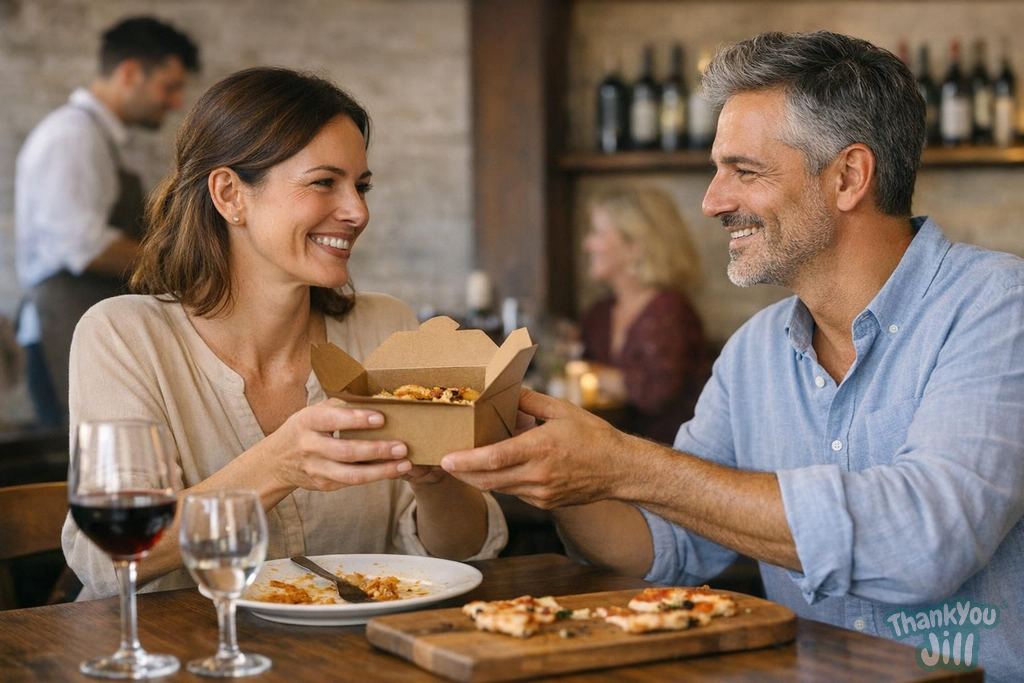
In many English-speaking and Asian countries, taking leftovers home from a restaurant is a normal and socially accepted practice. In Italy, for decades it was associated with a lack of style or an unwillingness to show abundance. This culture began to shift slowly, accelerated by growing awareness of food waste, and definitively changed with the 2022 legislation.
Italy's doggy bag law: the legislative decree
Law No. 206 of December 30, 2021 (Delegation Law for the Reform of the Consumer Code, with delegation to the Government for anti-waste promotion) and subsequent ministerial circulars established that every Italian restaurant is obligated to provide customers with containers to take home leftover food upon request, except for proven food safety reasons. It's not a discretionary option for the restaurant: it's a consumer right. A restaurant that refuses without valid reason violates anti-waste regulations. In practice, enforcement isn't yet uniform across the country: many restaurants comply, but some still resist culturally. Public and restaurant owner awareness campaigns are ongoing.
Food waste in restaurants: Italian figures
The restaurant industry is responsible for a significant share of food waste in Italy. According to data from Coldiretti and Last Minute Market, Italian restaurants produce approximately 1.2 million tons of food waste annually. The amount of prepared but unconsumed food (left on plates) is difficult to quantify but estimated at around 10-15% of served portions. In a restaurant serving 80 covers per service, this translates to tens of kilograms of wasted food daily. The doggy bag is just one solution: smart anti-waste kitchens, better-calibrated portions, and tasting menus with smaller servings are other tools restaurateurs can use.
How to ask for a doggy bag without embarrassment
Cultural change is underway but not yet complete: asking for a doggy bag still requires courage in some Italian settings. How to do it naturally: choose the right moment (when the waiter clears your plates, not at the end of the evening when it's hectic), use direct and positive language ("Can I take what's left? It would be a shame to waste it"), or "My eyes were bigger than my stomach—could you wrap this up for me?" In restaurants more attentive to sustainability (which they communicate on menus or social media), the request is already normalized. In more formal traditional restaurants, a direct and calm request is almost always welcomed warmly by staff.
How to store and use food brought home from a restaurant
Food safety: food brought home from a restaurant must be refrigerated within 2 hours of leaving the establishment (or 1 hour if the outside temperature exceeds 30°C). Consume it within 24 hours in the refrigerator. Don't refreeze restaurant food (it's already been cooked and cooled). Creative uses: restaurant risotto becomes fried rice the next day (pressed in a pan with butter), roast becomes sandwich filling or a reheated second course with a bit of broth, unfinished dessert becomes the base for a trifle or freezes like ice cream if it's gelato or mousse.

Taking leftovers home from a restaurant isn't bad manners: it's respect for the food, for those who cooked it, for the planet that provided the ingredients. Since 2022, it's a legal right. Exercise it without embarrassment: every time you take home that unfinished risotto, you're doing the right thing for yourself, the restaurateur, and the planet.
Zero-waste restaurants: Italy's most virtuous initiatives
Some Italian restaurants are adopting systematic anti-waste approaches that go beyond the doggy bag. Examples include: restaurants that publish their waste rate on the menu ("we produce less than 2% kitchen waste"), restaurants using tasting menus with smaller but more numerous portions (reducing food left on plates), restaurants donating unserved food at day's end through Too Good To Go or directly to social canteens, kitchens that rigorously use every part of vegetables and animals (nose-to-tail and root-to-stem). The Italian Michelin Guide has begun valuing sustainability among its evaluation criteria: a signal that the high-end market is moving toward virtuous practices.
The doggy bag in other countries: what we can learn
USA and Canada: the doggy bag has been normal for decades. Restaurants proactively offer packaging to take away. Portions are often intentionally generous, knowing customers will take leftovers home. Japan: anti-waste culture is deeply rooted (the concept of "mottainai": waste nothing). Japanese restaurants serve precise portions, calibrated to be completely consumed. France: the Garot Law (2016) introduced an obligation for restaurants with over 180 covers to provide doggy bags upon request: a precursor to Italian law. Sweden: anti-waste awareness is very high. Restaurants often have containers on the table without waiting for a request. Italy is approaching this standard: we're getting there.
How to raise children and teens' awareness about doggy bags
Taking restaurant leftovers home with children present is a micro-lesson in anti-waste: explain why you're asking for the container, involve the child in choosing what to take home, engage them in preparing the next meal using what you brought. These small concrete experiences have far more educational impact than any theoretical discussion about food waste. Children who grow up seeing their parents ask for doggy bags normalize the behavior and perpetuate it in their adult lives.
Frequently asked questions
What is the consumer's right regarding doggy bags under Italy's 2022 law?
Since 2022, Italian law requires restaurants to provide containers for customers to take home leftovers upon request, except for food safety reasons. It's a consumer right, not merely a restaurant option.
How do I properly store food brought home from a restaurant to ensure safety?
Food must be refrigerated within 2 hours of leaving the establishment (1 hour if it's hotter than 30°C) and consumed within 24 hours. It's not recommended to refreeze food that's already been cooked and cooled by the restaurant.
How do I ask for a doggy bag naturally and without embarrassment at a restaurant?
It's best to ask when the waiter clears your plates, using direct and positive language, for example: "Can I take what's left? It would be a shame to waste it." In establishments focused on sustainability, the request is now routine.
What anti-waste practices do restaurants use beyond doggy bags?
Beyond doggy bags, some restaurants use smaller portions, tasting menus, donate unserved food to social canteens or through apps like Too Good To Go, and adopt nose-to-tail and root-to-stem techniques to reduce waste.

Latest News




Comments
No comments yet. Be the first!
Leave a comment