


 Italiano
 Français
 Deutsch
 Español
 Português
 Svenska
 Suomi
Suomi
Reusable Containers
Glass, stainless steel, silicone
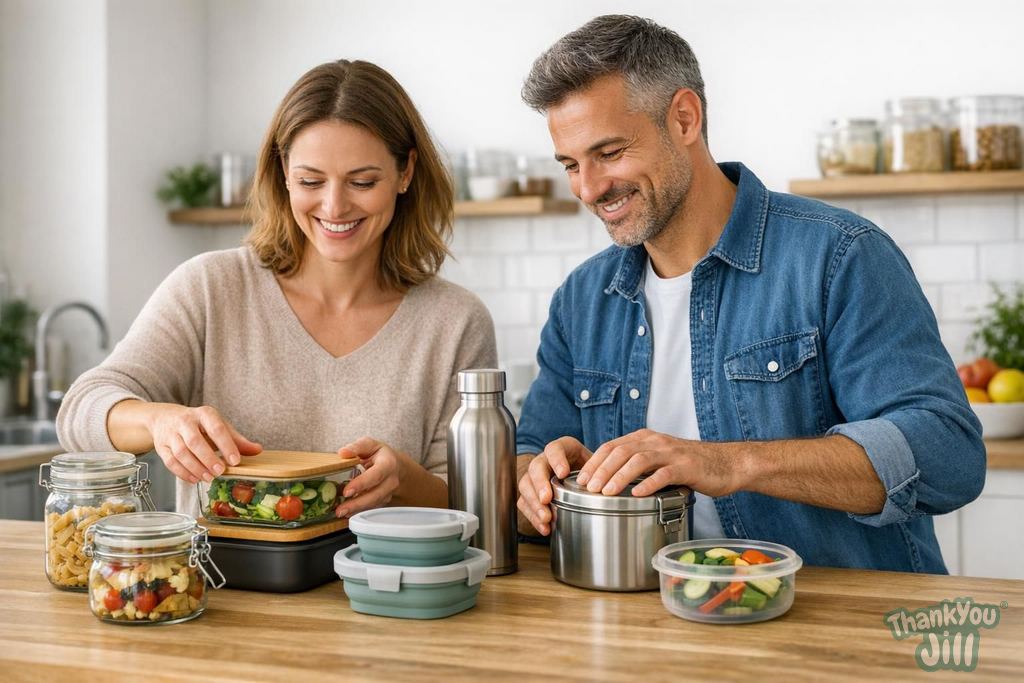
Quality reusable containers are an investment, not an expense. A set of glass containers costing €30–50 lasts 10–20 years and replaces hundreds of plastic bags, dozens of food wraps, and thousands of disposable containers. The financial return is positive within the first year, and the environmental benefit compounds every time you use the container instead of a single-use alternative. But not all "sustainable" materials are created equal: choosing between glass, stainless steel, silicone, and bamboo (to name the most popular) depends on your specific use case.
Glass: the gold standard for food storage
Glass is the ideal material for storing food in the fridge, freezer (it allows for expansion), microwave (without metal lids), and oven (Weck or Mason Jar-style jars withstand up to 200–220°C). Advantages: no chemical leaching into food, doesn't absorb odors or stains, washable countless times, lasts decades if not broken, 100% recyclable. Disadvantages: heavy, fragile, not suitable for children or outdoor use where breakage is a risk. Best glass food containers: airtight jars with silicone gaskets and metal clasps (like Bormioli Rocco, Fido, Kilner)—perfect for fridge and pantry storage. Glass containers with PP or bamboo lids: ideal for packed lunches at the office (lighter than jars). American Mason Jars (screw-top): affordable, multipurpose, perfect for meal prep. Pyrex and tempered glass: for oven cooking and microwave reheating.
Stainless steel: for on-the-go use and kids
Stainless steel (inox) is the best choice where glass isn't practical: water bottles and flasks, children's containers (unbreakable), lunch boxes, colanders, and cookware. Advantages: virtually indestructible, lighter than glass, safe for transport, doesn't leach chemicals into food, washable countless times. Disadvantages: not transparent (you can't see the contents), not microwave-safe, may slightly alter the taste of acidic foods over long storage (vinegar stored in steel for extended periods can develop a faint metallic taste). Steel quality: look for 18/8 or 304 stainless steel (marked on the label)—this is the standard food-grade steel that doesn't release nickel under normal conditions. Grade 316 is the highest quality (used in medicine): for everyday food use, 304 is more than sufficient. Stainless steel bottles: a quality 500 ml bottle (Klean Kanteen, S'well, Hydroflask, or Italian brands like Equa) lasts 10+ years and pays for itself in about 30–50 bottles of mineral water. The financial return is quick.
Food-grade silicone: flexibility and heat resistance
Food-grade silicone (100% platinum-grade silicone) is a versatile material combining flexibility, extreme heat resistance (−40°C to +230°C), and food safety. Ideal uses: reusable food bags (replacing Ziploc-style plastic bags), oven molds, elastic covers for bowls and pots, spatulas and kitchen utensils, protective oven mats. Advantages: extraordinary heat resistance, flexibility (bends and rolls), doesn't absorb odors, dishwasher-safe. Disadvantages: may slightly absorb fats over time (check periodically for odors), not infinitely recyclable (unlike glass), low-quality products may contain plastic fillers. How to spot quality silicone: the twist test (twist the silicone—100% platinum silicone doesn't change color; if it turns white, it contains low-quality plastic filler). Reliable brands: Stasher (USA, the most well-known reusable silicone bags), Zip Top, and various European brands certified FDA and CE food grade.
Bamboo and wood: with important caveats
Bamboo and wood often appear in "sustainable" packaging for containers, utensils, and cutting boards. Some important cautions: composite bamboo containers (bamboo + melamine or formaldehyde resin) aren't pure bamboo—the resin can release formaldehyde and melamine at high temperatures. Avoid "bamboo containers" for hot foods or hot liquids: the resin isn't designed for these conditions. Quality wooden cutting boards (olive, acacia, beech) are excellent for cutting but require care (periodic food-grade mineral oil or tung oil, avoid dishwasher). Untreated wood isn't antibacterial: clean thoroughly. Wooden and bamboo utensils are a great plastic-free alternative for picnics and outdoor use, but composite bamboo (with resin) is less safe than pure natural bamboo.

Thirty euros in glass containers replace ten years of plastic wrap and bags. Fifty euros in a stainless steel bottle replaces 500 plastic water bottles. Reusable containers aren't an expense—they're an investment that pays for itself in the first year and delivers environmental returns every single day for decades. Buy once, buy well. Don't buy many times, buy poorly.
The minimal reusable container kit: what to buy to get started
You don't need to buy everything at once—start small and add as you go. Step 1 (€0): use the glass jars you already have (tomato sauce, jam, olives—wash them well and they're ready). Step 2 (€10–15): one 500–750 ml stainless steel bottle (replaces plastic bottles). Step 3 (€15–25): 3–5 glass containers with airtight lids for the fridge and meal prep. Step 4 (€10–15): 2–3 quality reusable silicone bags (replace Ziploc-style bags). Step 5 (€5–10): one stainless steel lunch box for office lunches. Progressive total investment: €40–65. Annual savings on single-use products: €50–100. The system reaches steady state in year two, with only occasional replacements for wear.
How to care for reusable containers
Glass: wash in the dishwasher or by hand with regular dish soap. Silicone gaskets should be removed and washed separately (residue hides easily). Check them every 3–6 months: if they've hardened, replace them (replacement gaskets are available online for just a few euros). Stainless steel: dishwasher or hand wash. To remove stubborn residue: baking soda + boiling water for 10 minutes. Avoid bleach (it can damage the surface). Silicone: dishwasher or hand wash. For a deep clean: boil the bags in water for 3–5 minutes occasionally. If silicone develops persistent odors: soak in baking soda + warm water for 30 minutes. Replace silicone bags when they show cuts or the surface begins to flake.
Greenwashing in containers: how to spot it
Not everything sold as "sustainable" or "eco" actually is. Red flags for greenwashing in containers: "bamboo" labeled without specifying it's composite bamboo with resin (not pure), "biodegradable" without details on conditions and timeframe, "plastic-free" but made with other high-impact materials, nonexistent or self-created certifications (look for independent certifications: tested BPA-free, FDA approved, CE food grade). The practical rule: glass, 304 stainless steel, certified food-grade platinum silicone, untreated natural wood. These four materials don't require special certifications to be safe—they're safe by chemical definition.
Frequently asked questions
What are the main advantages of glass containers for food storage?
Glass containers don't leach chemicals into food, don't absorb odors or stains, are washable countless times, and last decades if not broken. They're ideal for the fridge, freezer, microwave (without metal lids), and oven up to 220°C.
When is it better to choose stainless steel containers over glass?
Stainless steel is preferable for on-the-go use, for children, and situations where breakage is a risk, thanks to its lightness, durability, and safety. It's not microwave-safe and can slightly alter the taste of acidic foods if stored long-term.
How do you identify quality food-grade silicone for reusable containers?
Quality 100% platinum silicone doesn't change color when twisted, while silicone with plastic fillers turns white. It's important to choose products certified FDA and CE food grade to ensure safety and durability.
How do you avoid greenwashing when buying reusable containers?
Avoid products with vague claims like "bamboo" without specifics, "biodegradable" without details, or self-created certifications. Prefer glass, 304 stainless steel, certified platinum silicone, and untreated natural wood—materials that are safe by chemical definition.
Latest News




Comments
No comments yet. Be the first!
Leave a comment