


 Italiano
 Français
 Deutsch
 Español
 Português
 Svenska
 Suomi
Suomi
Compostable Packaging
Innovations and Market Reality
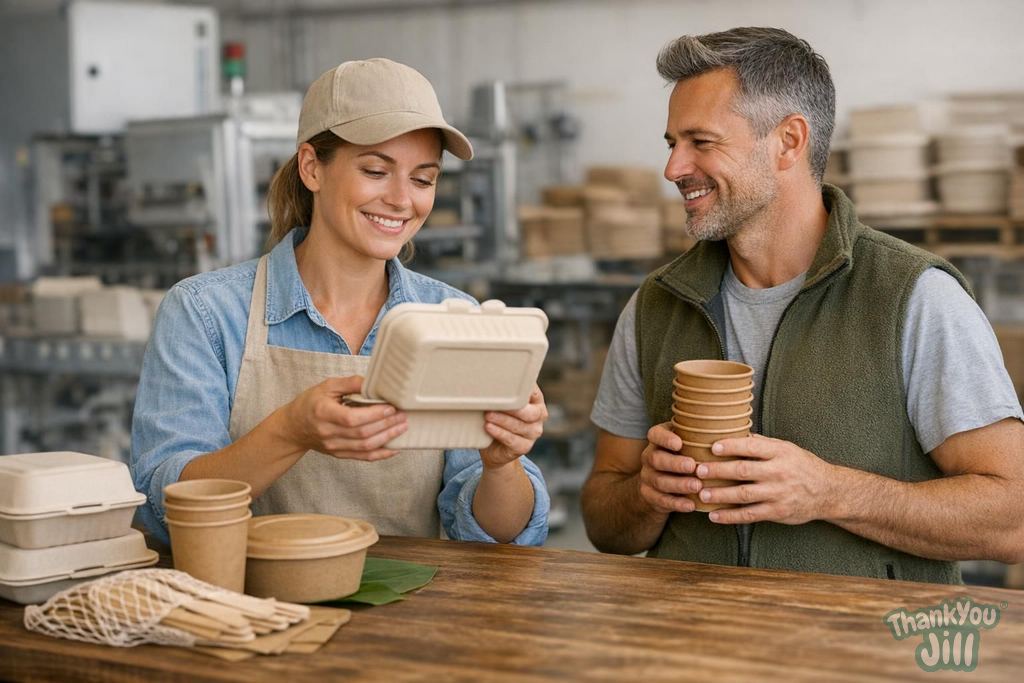
Compostable packaging is one of the sectors with the most terminological confusion and greenwashing in the sustainability market. Terms like "biodegradable," "compostable," "bioplastic," "eco-friendly," and "green" are often used interchangeably or misleadingly. Understanding the differences is essential for making informed choices and evaluating the actual sustainability of packaging materials.
The definitions that matter: biodegradable vs. compostable
Biodegradable: any material that is decomposed by biological organisms (bacteria, fungi). Almost everything is biodegradable given enough time: PET plastic degrades in 450–1,000 years. Even a conventional plastic bag is "biodegradable" in this sense. The term "biodegradable" alone has no regulatory value and can be applied to any material—it's classic greenwashing. Compostable (EN 13432, the European reference standard): it completely decomposes into quality compost under controlled conditions of temperature (55–60°C), humidity, and oxygen within 12 weeks, leaving no toxic residues. The standard distinguishes between: industrially compostable (requires industrial composting facilities at controlled temperature) and home compostable (decomposes in home composting at lower temperatures: "OK Compost Home" certification from TÜV Austria, the most restrictive certification). The practical difference is crucial: packaging certified only for industrial composting (the vast majority) doesn't break down in home composting and won't degrade if it ends up in a landfill or in nature. If your municipality's organic waste collection doesn't accept compostable packaging (many still don't), "compostable" packaging ends up in a landfill and serves no purpose compared to conventional plastic.
Bioplastics: what they are and the differences
Bioplastics are plastics made from biological raw materials instead of petroleum. But the word "bioplastic" encompasses very different categories: PLA (polylactic acid): biobased (from corn starch, sugarcane) AND industrially compostable. The most widespread bioplastic. However: it requires industrial composting, doesn't recycle with conventional plastics, and has a large land-use footprint (agricultural land for growing corn). PBAT: biobased (partially) AND compostable. Used for compostable shopping bags (those mandated by law in Italy since 2018). PHA (polyhydroxyalkanoates): biobased AND compostable even at home and in marine environments. The most sustainable bioplastic but also the most expensive. Bio-PE, Bio-PET: biobased (from sugarcane, corn) but NOT compostable: chemically identical to conventional plastic, they recycle like normal plastic. The "bio" adjective refers to the origin, not the end-of-life. Important: bioplastics don't recycle with conventional plastics (unless they're bio-PE or bio-PET). Mixing PLA with PET in recycling damages the quality of recycled material.
The most promising innovations in sustainable packaging
Seaweed-based packaging (agar, carrageenans): pilot studies and products featuring completely water-soluble or home-compostable packaging in just a few weeks. Startups like Notpla (UK) produce edible or compostable bags from brown seaweed for ketchup, sauces, and sports drinks. Functionalized paper and cardboard: coatings made from vegetable wax, PHA, modified cellulose, or biodegradable silicone are replacing plastic films on paper and cardboard containers (beverages, fresh foods). The "paper + bio-coating" approach is the most important trend in sustainable food packaging. Mushroom-based (mycelium packaging): fungal networks grow on agricultural waste, forming rigid compostable packaging blocks that break down at home in just a few weeks. Ecovative Design (USA) is the leading producer. IKEA has tested mycelium packaging for some products. Cellulose Nano Materials: cellulose extracted from agricultural waste (straw, olive pomace) processed into nanoparticles: produces transparent films with excellent barrier properties (against oxygen, moisture) and are compostable. One of the most advanced frontiers in European research.

That green bag labeled compostable you used for shopping: if you throw it in the trash or landfill because your municipality doesn't separately collect organic waste, it's useless. Compostable packaging is a good solution only if a system exists to compost it. Before buying the more expensive packaging, verify that your city accepts it in the right bin.
How to recognize reliable compostable packaging: certifications
To navigate the labels, look for these certifications on packaging: OK Compost Industrial (TÜV Austria mark): compostable in industrial facilities. The most common. Don't use it in home compost. OK Compost Home (TÜV Austria mark): the most restrictive. Compostable at home, at room temperature. Seedling (European Bioplastics mark): indicates compostability according to EN 13432 (equivalent to OK Compost Industrial). Very common in Europe. DIN CERTCO: German certification, equivalent to OK Compost. How to use them correctly: packaging with OK Compost Industrial → in the home organic waste bin (which goes to an industrial composting facility). Verify that your municipality accepts compostable packaging in organic waste (not all do: some ask you to remove it). Packaging with OK Compost Home → also in home composting. Without certification → not in composting: in general waste or specific recycling.
The European Packaging Regulation (PPWR): 2024 updates
The European Packaging and Packaging Waste Regulation (PPWR), in advanced legislative process in 2024, introduces much stricter requirements for packaging. Among the main measures: minimum recycled content targets in plastic packaging (from 10% to 65% by 2040 depending on category), bans on certain packaging formats (e.g., single-use for fruit and vegetables under 1.5 kg, lightweight plastic bags under 15 microns, food and beverage packaging in specific contexts), total packaging reduction targets per product, reusability obligations (refillability) for certain categories. The PPWR is one of the most important environmental regulations in European legislation in recent years and will significantly change the packaging market across Europe by 2030.
Alternatives to packaging: reduce before substituting
The waste hierarchy (EU waste framework directive) indicates that reduction comes before recycling and composting. Before choosing the "best" packaging, the most sustainable choice is to reduce packaging: bulk: buying bulk products (rice, legumes, cereals, flour, detergents, cosmetics) completely eliminates the packaging problem. The number of bulk shops in Italy is growing but still limited compared to Northern Europe. Concentrates: concentrated detergents and cosmetics reduce packaging per unit of active ingredient. One dose of concentrated detergent in a solid tablet eliminates 80% of packaging compared to the liquid version. Reusable: delivery and return system for reusable containers (milk in glass bottles, oil in cans, water in pitchers from the tap). The glass bottle milk model has come full circle: it's making a comeback in many European markets.
Frequently Asked Questions
What's the difference between biodegradable and compostable packaging?
Biodegradable packaging decomposes slowly through biological organisms without precise standards, while compostable packaging completely decomposes into quality compost within 12 weeks under controlled conditions, leaving no toxic residues, according to the EN 13432 standard.
How can I tell if compostable packaging is suitable for home or industrial composting?
Check the certification: OK Compost Home indicates home compostability at room temperature, while OK Compost Industrial requires industrial composting facilities at elevated temperatures (55–60°C). Without these certifications, the packaging may not degrade properly.
What happens if compostable packaging ends up in a landfill or dry waste?
If compostable packaging isn't collected in the organic waste bin and ends up in a landfill or dry waste, it won't degrade effectively and loses its environmental value, behaving like conventional plastic and contributing to pollution.
What are the most promising innovations in sustainable compostable packaging?
Innovations include completely water-soluble or compostable seaweed-based packaging, bio-coatings on paper and cardboard, mushroom-based (mycelium) packaging compostable at home, and transparent nanocellulose films with excellent barrier properties and compostability.

Latest News




Comments
No comments yet. Be the first!
Leave a comment