


 Italiano
 Français
 Deutsch
 Español
 Português
 Svenska
 Suomi
Suomi
How Plants "See" Light Without Eyes
Phytochromes and Light Perception
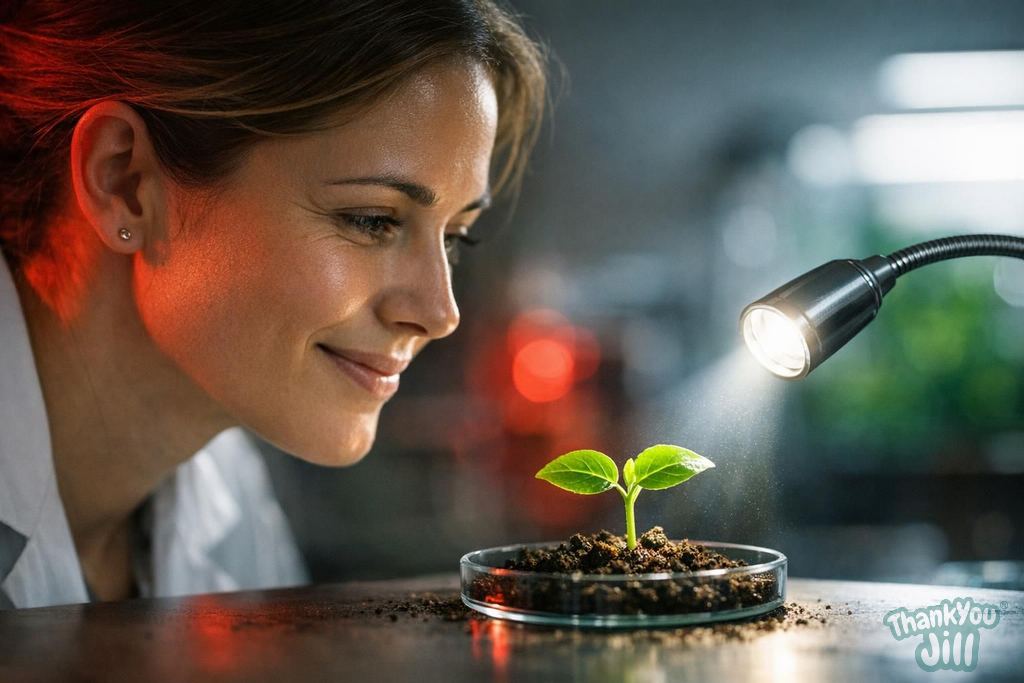
Eyes are among the most sophisticated organs evolution has produced in the animal kingdom. Yet plants have developed equally sophisticated light-detection systems (in entirely different ways), using light-sensitive proteins distributed throughout every cell in their bodies. Plant vision doesn't produce images; it produces information about light quality that guides some of the most critical decisions in a plant's life: when to germinate, how to orient growth, when to flower, when to enter dormancy. Plant photobiology is one of the richest fields of botanical discovery over the past 50 years, with enormous practical applications for agriculture and horticulture.
Plant Photoreceptors: A Network of Molecular Sensors
Plants possess several types of light-sensitive proteins (photoreceptors) specialized for different wavelengths. Phytochromes (Phy): proteins that reversibly change shape in response to red light (660 nm) and far-red light (730 nm). They function as molecular switches: red light activates them (Pr → Pfr: active form), far-red light deactivates them (Pfr → Pr: inactive form). Plants use this system to detect: the presence of shade (neighboring leaves absorb red light and transmit far-red light; a high R:FR ratio indicates direct light; a low ratio indicates shade), day length (the proportion of accumulated Pfr during the day varies with photoperiod length—the basis of seasonal detection), seed germination (seeds germinate when phytochromes detect direct red light, signaling they're not buried too deep in soil). Cryptochromes (CRY): photoreceptors for blue light (400–500 nm). They regulate plants' circadian rhythms (biological clocks), photomorphogenesis (light-driven growth), and flowering control. Phototropins (PHOT): blue light photoreceptors. They control phototropism (growth orientation toward light), stomatal opening in response to light, and chloroplast movement within cells (they shift to maximize or avoid direct light—chloroplast photorelocation). UVR8: the photoreceptor for ultraviolet light (UV-B, 280–315 nm). It regulates flavonoid production (UV-protective pigments) and defense responses to UV damage. Zeitlupe (ZTL): a blue light photoreceptor involved in fine-tuning the circadian clock.
Phototropism: Seeing Light and Growing Toward It
Phototropism (light-oriented growth) is one of the most visible manifestations of plant "vision." Darwin observed and scientifically described phototropism in oat coleoptiles in 1880 (in his book "The Power of Movement in Plants"). The molecular mechanism works like this: phototropins in the apical cells of the shoot detect asymmetrical blue light (one side illuminated, the other shaded). The illuminated side produces less auxin (the primary growth hormone) or redistributes it toward the shaded side. The shaded side, with more auxin, elongates faster, causing the shoot to bend toward the light. This mechanism wasn't fully clarified until the twentieth century, but Darwin had already intuited that "something" produced by the coleoptile apex moved downward, causing the curve—a remarkable premonition of the discovery of plant hormones 40 years later. Phototropism isn't limited to shoots bending toward light: roots display negative phototropism (growing away from light) and positive gravitropism (growing downward). Stomatal opening in response to light: phototropins in guard cells detect morning blue light and activate proton pumps that inflate the guard cells, opening the stomata for photosynthesis. It's a "clock-like" mechanism that uses light quality (morning blue light) as a signal for the start of the photosynthetic day.
Photoperiodism: How Plants Count Hours of Light
Photoperiodism is the plant response to day length (photoperiod), used primarily to control flowering. It's one of the most elegant physiological phenomena in plant biology. Plants fall into three categories: long-day plants (LDP): they flower when day length exceeds a critical threshold (typically 12–16 hours). Examples include spinach, sugar beet, lettuce, and iris. They flower in spring and summer. Short-day plants (SDP): they flower when day length is shorter than a critical threshold. Examples include chrysanthemum, rice, soybean, and tobacco. They flower in autumn. Day-neutral plants (DNP): they flower regardless of photoperiod (corn, tomato, cucumber). The short-day plant paradox: research revealed that plants don't actually measure day length—they measure uninterrupted night length. A light interruption in the middle of the night (artificially shortening the night) prevents flowering in short-day plants even if the total "day" is short. The mechanism: phytochrome Pfr accumulated during the day slowly converts back to Pr during the night. Plants measure the duration of this conversion (the length of uninterrupted night)—the circadian clock and phytochrome mechanisms work together. Practical horticultural applications: florists use artificial night lighting (photoperiod lighting) to control flowering timing in chrysanthemums, daisies, and gerberas year-round, independent of season. It's an elegant practical application of decades of photobiological research.

Every cell in a plant is an eye. It doesn't see images, but it detects light quality—its wavelength, direction, and duration—with extraordinary molecular precision. Phytochromes are ancient molecular switches that have guided flowering, germination, and growth long before eyes ever existed in the animal world. For plants, light isn't just energy: it's information.
Chlorophyll and accessory pigments: light as food
Beyond signaling photoreceptors, plants have energy-harvesting photoreceptors: photosynthetic pigments. Chlorophyll a (the primary pigment): absorbs mainly red light (680 nm) and blue-violet light (430 nm). It reflects green: that's why plants are green. Green light is the least useful for photosynthesis (the plant reflects it instead of absorbing it). Chlorophyll b: an accessory pigment that absorbs blue light (640 nm) and orange. It broadens the absorption spectrum. Carotenoids (beta-carotene, lutein, zeaxanthin, fucoxanthin in algae): yellow, orange, and red pigments. They absorb blue-green light (400-500 nm) and transfer it to chlorophyll. They also function as photoprotectors: they dissipate excess light energy (which would otherwise damage the photosynthetic system) as heat. Anthocyanins (red and purple): they don't participate in photosynthesis. They function as sunscreen for young leaves exposed to intense light, as repellents for herbivores (red leaves mimic toxic or inedible leaves), and as attractants for pollinators (red and purple flowers). LEDs in modern horticulture: understanding the photosynthetic spectrum has enabled the development of agricultural LEDs that emit primarily red and blue light (the two wavelengths most used by photosynthesis), reducing energy consumption by 30-40% compared to full-spectrum lamps in greenhouses.
Light and the circadian clock in plants
Like all living organisms, plants have a biological clock (circadian clock) that synchronizes physiological processes with the 24-hour light-dark cycle. The circadian clock in plants is one of the best-studied in all organisms: Arabidopsis thaliana is the primary model organism for plant chronobiology. Circadian rhythms in plants include: stomatal opening and closing (they open in the morning, close in the evening: synchronized with light), leaf movements in legumes (leaves rise during the day and lower at night: nyctinastic movements), nectar production in flowers (synchronized with pollinator activity hours: bees visit flowers when nectar production is highest), photosynthesis (photosynthetic capacity peaks circadianly during midday hours). The molecular mechanism of the circadian clock in plants (the CCA1/LHY and TOC1 loop) is completely different from that in animals and fungi: an extraordinary case of convergent evolution of the same timing mechanism in vastly different branches of the tree of life. Cryptochromes (blue light photoreceptors) are the primary synchronizers of the circadian clock in plants: morning blue light resets the clock each day, ensuring synchronization with the solar cycle.
Practical applications of plant photobiology
Understanding plant vision has enormous practical applications in modern agriculture. Controlled photoperiod in greenhouses: manipulating the photoperiod with artificial lights enables off-season production of flowers (chrysanthemums, daisies, poinsettias) and certain vegetables. Optimized LED spectrum for cultivation: each crop has different absorption profiles. New-generation LED systems (Signify Philips GreenPower, LumiGrow) allow spectrum adjustment to maximize growth, nutritional quality (for example: UV-B light increases vitamin D production in plants like mushrooms and kale), or flowering. Dormancy management: photoperiod manipulation is used in fruit growing to control dormancy in fruit trees (apples, pears) and to advance or delay flowering in relation to late frosts. Light-regulated germination in seedling production: controlled-spectrum lights in germination chambers optimize germination percentage and seedling development speed for transplanting. Space agriculture: NASA studies optimal light profiles for food production in space, where natural sunlight isn't always available with optimal spectrum and intensity.
Frequently Asked Questions
What is the role of phytochromes in how plants perceive light?
Phytochromes are light-sensitive proteins that detect red and far-red light, allowing plants to sense shade, day length, and trigger seed germination based on the quality and quantity of light received.
How does phototropism work in plants and which hormone is involved?
Phototropism is growth directed toward light, mediated by phototropins that detect asymmetric blue light. Auxin, a plant hormone, redistributes toward the shaded side, causing cell elongation that bends the stem toward the light.
How do plants use photoperiodism to regulate flowering?
Plants measure the duration of uninterrupted night through phytochromes to determine flowering time. Long-day plants flower with short nights, while short-day plants flower with long nights; this mechanism is also used to control flowering in artificial cultivation.
How does blue light affect the circadian clock in plants?
Blue light, perceived mainly by cryptochromes, resets the plant's circadian clock daily, synchronizing physiological processes like stomatal opening, photosynthesis, and nectar production with the natural light-dark cycle.

Latest News



Comments
No comments yet. Be the first!
Leave a comment