


 Italiano
 Français
 Deutsch
 Español
 Português
 Svenska
 Suomi
Suomi
Roots
The Hidden Brain of Plants
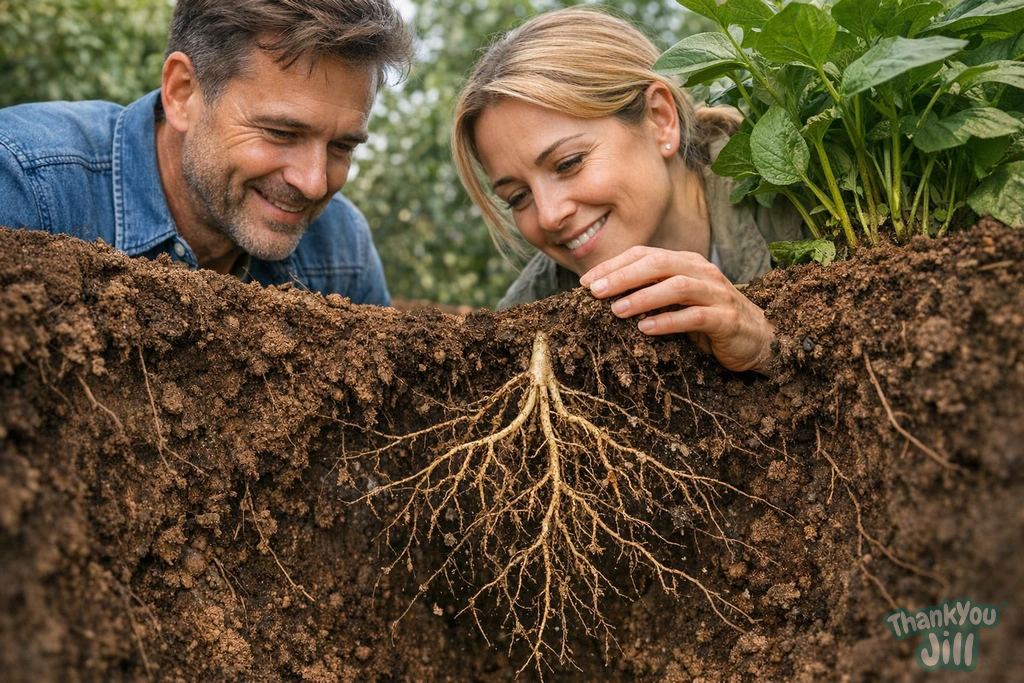
In common understanding, roots are tubes that transport water and nutrients from soil to the plant. Research over the past two decades has revolutionized this view: roots are organs of perception, information processing, and navigation among the most sophisticated in plant biology. Root tips (root apex, root meristem) are zones of maximum sensory activity: they simultaneously integrate signals of gravity, light, moisture, ionic concentrations (nitrogen, phosphorus, potassium, calcium, sodium), temperature, pH, electrical fields, mechanical signals (soil hardness), and osmotic pressure. This multi-parameter integration is what enables roots to navigate through soil toward water and nutrients while avoiding obstacles, in a three-dimensional environment in constant flux.
The Root Tip as an Information Processing Zone
Stefano Mancuso and Francesco Baluška proposed that the transition zone between the meristem and the elongation zone of the root tip (the Transition Zone, TZ) has properties functionally analogous to nerve tissue: high metabolic activity, communication through electrical and chemical signals, plasticity in response to experience. The TZ exhibits remarkable documented properties: actin accumulation (the actin cytoskeleton is fundamental for plasticity and movement in animal cells, including neurons), presence of ion channels similar to neuronal ones (channels for Ca2+, K+, Cl-), presence of animal neurotransmitters (acetylcholine, dopamine, serotonin, GABA) in functionally active concentrations, transmission of electrical signals (electrical potentials similar to action potentials traverse the root tip in response to stimuli), communication with mycorrhizae and other roots through chemical signals in soil. The main scientific critique: the fact that plants produce molecules similar to animal neurotransmitters doesn't imply they use them for processes analogous to neuronal ones. Molecular convergence doesn't imply functional convergence. The debate remains open and productive.
Gravitropism: How Roots Know Which Way Is Down
Gravitropism (orientation of growth in response to gravity) in roots is one of the most studied physiological phenomena in botany. Roots grow downward (positive gravitropism) with remarkable precision even in disturbed environments. The mechanism: in columella cells (the central part of the root tip), specialized organelles called amyloplasts (plastids filled with starch granules) exist—they are the gravity sensors. Amyloplasts, denser than the surrounding cytoplasm, sediment downward when the root is tilted. Their sedimentation activates calcium ion channels, producing an asymmetric Ca2+ gradient. The calcium gradient activates auxin (through the PIN/AUX pathway): auxin distributes asymmetrically toward the lower side. Auxin stimulates cell elongation: the lower side elongates more than the upper side, and the root bends downward. This mechanism is elegant, rapid (gravitropic response begins within minutes), and highly precise. The gravitropic sensitivity of roots is such that they can detect inclinations of just a few degrees from vertical. Space experiments: growth experiments with plants on the International Space Station (microgravity) showed that roots in the absence of gravity grow in random directions, confirming that gravitropism is guided by gravity and not by other parameters.
Chemotropism: Smelling Nutrients in the Soil
Roots "smell" the soil: they detect concentration gradients of chemical molecules and orient their growth toward nutrient-rich areas or away from toxic substances. This is chemotropism (orientation in response to chemical stimuli). Phosphate and chemotropism: phosphate is one of the limiting nutrients in global agriculture. Roots of many plants detect phosphate gradients in soil and modify their root architecture in response to its availability: in phosphate-poor soils, they proliferate thin lateral roots and root hairs (to increase absorption surface), many plants form mycorrhizae with soil fungi to access otherwise inaccessible phosphate. Nitrogen and chemotropism: roots detect nitrate and ammonium gradients in soil. The growth response to nitrogen-rich "patches" (localized areas rich in nitrogen: such as around a decomposing animal carcass or a decaying leaf litter) is a local proliferation of lateral roots in the nutrient-rich area: the plant "invests" where there's greater return. The chemotropic capacity of roots has important agronomic implications: biofertilization with rhizobacteria (microorganisms that produce chemical signals stimulating root growth toward nutrients) is a frontier of sustainable agriculture.

Beneath the soil we walk on lies an extraordinary world: thousands of root tips navigating, perceiving, communicating, cooperating, and competing. A mature tree can have millions of active root tips simultaneously, each with its own sensory capacities. Mancuso's distributed brain is not a romantic metaphor: it's a precise functional description of how the plant operates without a central control.
Root Architecture: An Adaptive Response to Environment
The architecture of the root system (the three-dimensional shape of all roots together) is not fixed and genetically predetermined: it's a plastic response to the environment that the plant continuously remodels based on soil conditions. The parameters determining root architecture: water availability (in dry soils: deeper roots toward water tables; in superficially moist soils: shallower roots), nutrient availability (nitrogen or phosphate patches stimulate local proliferation of lateral roots), soil compaction (roots preferentially grow along pores and channels in soil, avoiding compact zones), presence of antagonists (allelopathic substances from other plants: roots turn away), presence of beneficial microorganisms (signals from mycorrhizae and rhizobacteria attract roots). This plasticity of root architecture is a form of behavioral adaptation that optimizes resource acquisition in a heterogeneous environment. In agronomic research, optimal root architecture is central to developing drought-resistant crops (deeper roots to reach water tables in case of water scarcity) and more phosphate-efficient ones (roots with greater growth angle to explore surface soil where phosphate concentrates).
Roots and Symbiosis: The Great Underground Trade
Roots don't act in isolation: they're immersed in a microbial ecosystem of extraordinary complexity (the rhizosphere) with which they interact actively and mutualistically. The rhizosphere (the zone of soil influenced by roots: 2-5 mm around each root) has a bacterial density 10-100 times higher than soil far from roots. Roots release root exudates (sugars, amino acids, organic acids, phenolic compounds: 20-40% of the carbon fixed by the plant's photosynthesis is secreted by roots): they nourish the microbial community of the rhizosphere. In return, the rhizosphere microbial community provides the plant with: mineralized nutrients (nitrogen, phosphorus, potassium), growth hormones, protection against soil pathogens. Mycorrhizae (see dedicated article) are the most important symbiosis: 90% of terrestrial plants form mycorrhizae with soil fungi, enormously extending the absorption network. The rhizobium-legume symbiosis (well-known): Rhizobium bacteria in root nodules of legumes fix atmospheric nitrogen (N2) making it available to the plant. This symbiosis revolutionized agriculture: legume crops don't require nitrogen fertilizers and enrich soil for subsequent crops. The exploration of analogous symbioses with cereals (the Rhizobium-maize symbiosis is at an advanced research stage) could enormously reduce nitrogen fertilizer use in agriculture.
Root Hairs: The Hidden Absorption Surface
Root hairs are thin extensions of epidermal cells of the root, 0.1-1 mm long. They're the structures where most water and nutrient absorption occurs: they increase the contact surface between root and soil by 10-100 times. In a single wheat plant, it's estimated there are approximately 14 billion root hairs, with a total surface area of about 600 m²: more than a tennis court. Root hairs develop within hours (just a few hours after the root tip explores a new soil zone) and die within days: the root hair zone continuously moves toward the tip, in a dynamic of constant renewal. Regulation of root hair density: in phosphate-rich soils, plants produce fewer root hairs (the large exploration effort isn't necessary). In phosphate-poor soils, hair density increases markedly. This adaptive regulation is mediated by genes that respond to phosphate levels: a form of molecular "decision" about the most efficient absorption strategy in that specific context.
Frequently Asked Questions
How do roots orient themselves in soil to find water and nutrients?
Roots simultaneously integrate signals of gravity, light, moisture, ionic concentrations, temperature, pH, and other chemical and physical parameters. This processing allows them to navigate through soil while avoiding obstacles and directing themselves toward essential resources.
What is the role of the Transition Zone in the root tip?
The Transition Zone has properties similar to nerve tissue, with high metabolic activity and transmission of electrical and chemical signals. Here, sensory information is processed, guiding root growth and response to environmental stimuli.
How do roots modify their architecture in response to nutrient availability such as phosphate and nitrogen?
Roots increase the proliferation of lateral roots and root hairs in the presence of limiting nutrients like phosphate and nitrogen. This plasticity allows optimization of absorption, adapting the root system's shape to soil conditions.
How does the symbiosis between roots and microorganisms in the rhizosphere work?
Roots release exudates that nourish microorganisms in the rhizosphere. In return, these provide mineralized nutrients, growth hormones, and protection against pathogens. Mycorrhizae extend the absorption network, improving the plant's nutritional efficiency.
Latest News




Comments
No comments yet. Be the first!
Leave a comment