


 Italiano
 Français
 Deutsch
 Español
 Português
 Svenska
 Suomi
Suomi
Animal Partnerships: How Plants and Animals Co-evolve
Plant-insect mutualism and the alliances that shape ecosystems
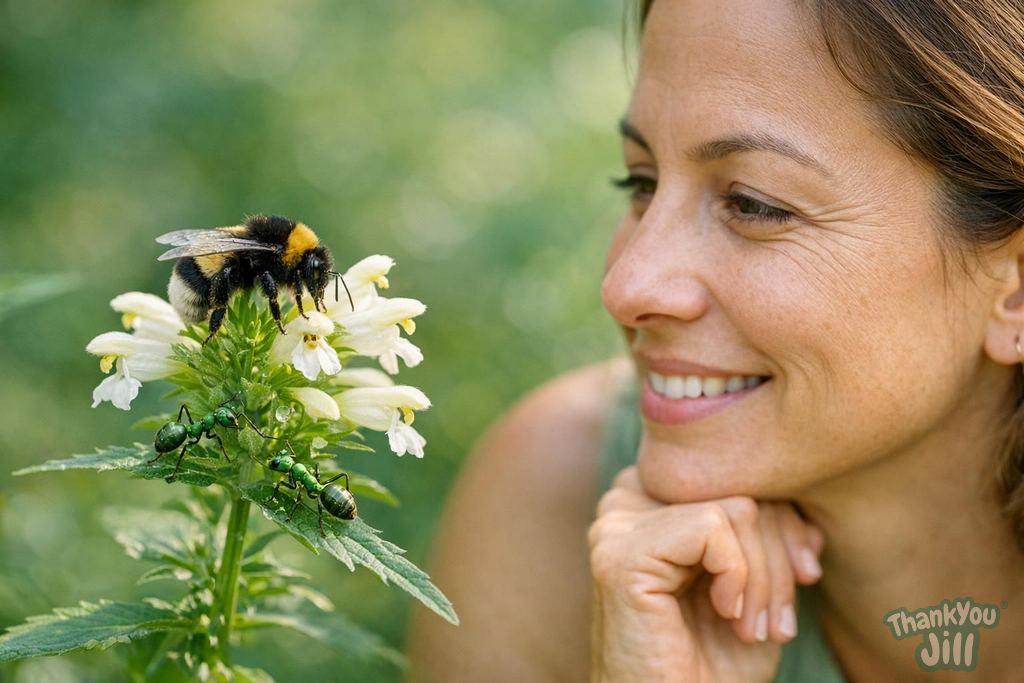
Mutualism is a biological relationship where both partners benefit. Plant-animal mutualisms rank among the oldest and most diverse relationships in terrestrial life: flowering plants (angiosperms) have co-evolved in tight partnership with their animal pollinators for roughly 130 million years, and this relationship is one of the primary forces driving the extraordinary botanical diversity we see today. Without animal pollinators, most flowering plants wouldn't exist in their current form; without flowering plants, most pollinating insects wouldn't exist either.
nnThe flower-pollinator co-evolution: a 130-million-year partnership
nnThe explosion of flowering plants in evolutionary history (around 130 million years ago, in the Lower Cretaceous) coincided with the explosive diversification of insects (especially bees, wasps, and butterflies). This is no coincidence: flower evolution co-evolved with pollinator evolution in a process of mutual adaptation that produced the extraordinary flower-pollinator specialization we observe today. The main pollinator categories and their co-evolved flower characteristics: bees and bumblebees (melittophily): open flowers blooming by day, blue-yellow-purple colors (bees see these wavelengths well but not red), open platform or tube shape with openings suited to bee size, abundant nectar in accessible positions, visual guides (nectary guides: UV patterns visible to bees but not to us). Butterflies (psychophily): long-tubed flowers (for the proboscis), vivid colors (red, orange, purple), deep nectar. Night-flying moths (sphingophily): flowers opening at night, white or cream-colored (visible in darkness), intense fragrance at night (vanilla, jasmine), long tubes for hawkmoth proboscises. Flies (myophily): flowers often flesh-colored or brown-purple, odors of decay or feces, open morphology (flies lack long proboscises). Hummingbirds and other nectar-feeding birds (ornithophily): red flowers (hummingbirds see red well, but their main competitors—bees—don't), sturdy tubes to support the beak, abundant and concentrated nectar. Bats (chiropterophily): white or cream-colored flowers, night-time opening, bell or brush-shaped, musky-fruity scent, positioned on the trunk or main branches (not hidden among leaves).
nnAnimal-mediated seed dispersal: zoochory
nnAfter fertilization, seeds must travel far from the parent plant to colonize new environments and reduce competition with it. Animal-mediated dispersal (zoochory) is the most common strategy in temperate forest plants and tropical rainforests. Endozoochory (dispersal through the digestive tract): the animal eats the fruit, digests the flesh, and seeds pass intact through the digestive system, deposited in feces far from the parent plant. Many seeds have hard coats (sclerified seed coats) that survive digestion; some species actually require passage through the digestive tract for germination (seeds of certain Acacia species germinate better after passing through the intestines of African buffalo: the digestive process scarifies the hard seed coat). Fleshy, colored fruits (red, black, blue) are adaptations to attract frugivorous birds. Epizoochory (external attachment): seeds stick to the outside of animal bodies through hooks (burdock, agrimony) or sticky resins (mistletoe, strophanthus). Already discussed in the article on spines. Myrmecochory (ant-mediated dispersal): about 3,000 plant species in temperate forests (including many European understory plants: violets, snowdrops, primroses, liverworts) produce seeds with elaiosomes. Ants collect seeds for the elaiosomes, carry them to the nest, eat the elaiosome, and discard the seed in an organic waste deposit: an excellent substrate for germination. Dispersal ensures seeds reach favorable microhabitats (ant nest deposits contain soft, moist, nutrient-rich soil). Rabbits and mice as secondary dispersers: many European plant seeds are cached by rodents (jays, dormice, voles) as winter food reserves. A significant percentage is never recovered: the disperser's "forgetfulness" becomes dispersal for the plant.
nnDefensive alliances: plants that house protective animals
nnSome plants have evolved special structures (domatia) that house defensive animals in exchange for protection from herbivores or pathogens. Myrmecophytic acacias (Acacia drepanolobium, Africa): produce hollow, swollen spines (enlarged spine tips) inhabited by Crematogaster ants. The ants receive shelter in the hollow spine tips and nectar from extrafloral nectaries on the plant. In return, they protect the plant from herbivores (attacking any animal that touches it) and remove climbing plants attempting to cover the leaves. Experiment in Mpala National Park (Kenya, 2003): acacias from which ants were experimentally removed showed far greater defoliation by elephants compared to acacias with active ant colonies. The defense signal: ants produce very strong alarm pheromones when large herbivores approach. Elephants learn to avoid acacias with active ant colonies. Leaf domatia: many temperate forest plants (including grapevines, apple trees, pear trees) produce small cavities or trichomes on the leaf undersides (domatia) that house predatory mites of the Phytoseiidae family. Predatory mites find shelter and favorable microhabitat in the domatia; in return, they prey on herbivorous phytophagous mites that would damage the leaf. A form of mutualism—hospitality for protection—similar to the ant-Acacia relationship but at a much smaller scale.

Every time we eat an apple, a fig, a tomato, or a blueberry, we're consuming the result of a millions-of-years evolutionary alliance between the plant and its pollinators. The plant has invested enormous resources in producing sweet, juicy flesh to attract animal dispersers. We are the beneficiaries of an agreement not made for us, but one we've become an integral part of. And when pollinators disappear, this chain breaks.
The Pollinator Crisis: A Threatened Alliance
The flower-pollinator co-evolution has created a system of interdependence so tight that the loss of a single pollinator species can trigger the extinction of its co-evolved plant (and vice versa). This vulnerability makes the pollinator crisis one of the most serious ecological emergencies we face. The numbers tell a stark story: across Europe, wild bee populations (over 600 species in Italy alone) have declined by 30–75% over the past three decades in many agricultural areas. In North America, managed honeybee colonies have lost 40% of their hives annually over the last 15 years (Colony Collapse Disorder). The main culprits: pesticides—especially neonicotinoids, systemic insecticides that distribute throughout the entire plant, including pollen and nectar, and disrupt bee navigation and memory; habitat loss from the disappearance of flowering areas like meadows, field margins, and hedgerows; pathogens and parasites such as Varroa destructor, an Asian mite that parasitizes honeybees, and Nosema ceranae, a fungal gut parasite; climate change, which causes phenological mismatch—plants flower and pollinators emerge out of sync as temperatures rise; and agricultural monoculture, which creates uniform landscapes with minimal floral diversity for months on end. The agricultural fallout is severe: 75% of global food crops depend on animal pollination, accounting for 35% of global food production by volume. Apples, pears, strawberries, almonds, sunflowers, rapeseed, tomatoes, cucumbers, and squash all require animal pollinators. The economic value of pollination services is estimated at €153–577 billion annually worldwide (IPBES, 2016).
Supporting Plant-Animal Mutualisms in Your Garden and Orchard
Even at the scale of a single garden or vegetable patch, you can foster plant-pollinator relationships and help conserve local pollinator populations. Plants that attract Italian pollinators: solitary bees (over 500 species in Italy, the most efficient pollinators for many crops) love lavender, borage, phacelia, thyme, sage, rosemary, yarrow, and agastache. Bumblebees are drawn to clover, melilot, sage, foxglove, and snapdragon. Butterflies prefer butterfly bush, verbena, oregano, poppy, and thistle. Management principles: staggered blooms—choose plants that flower at different times from February through November to support pollinators year-round; floral diversity—aim for at least 10–15 different flowering species in your garden; reduce or eliminate pesticides, especially synthetic pyrethroid insecticides, imidacloprid, and clothianidin; maintain natural areas by leaving bare soil patches for ground-nesting bees, wood piles for carpenter bees, and hollow stems for mason bees; and install bee houses—not necessarily for honeybees, but for solitary bees that nest in hollow reed tubes, drilled wood blocks, or perforated brick stacks. Solitary bees are remarkably efficient pollinators: a single female Osmia (mason bee) pollinates as many plants as 80–120 honeybee workers.
Frequently Asked Questions
What characteristics do flowers have when they've evolved to attract specific animal pollinators?
Flowers have adapted to their pollinators through specific colors, shapes, and scents. For example, bees and bumblebees prefer blue, yellow, and purple flowers with accessible nectar, while butterflies are attracted to long-tubed flowers in vivid colors, and bats seek out white night-blooming flowers with musky odors.
How does seed dispersal by animals work, and what are the main methods?
Animal-mediated seed dispersal happens primarily through endozoochory, where seeds pass intact through an animal's digestive system; epizoochory, where seeds stick to the outside of an animal's body; and myrmecochory, where ants carry seeds to their nests, promoting germination.
How do plants use alliances with animals to defend themselves against herbivores?
Some plants host defensive animals like ants in specialized structures called domatia that protect the plant by attacking herbivores. For instance, myrmecophytic acacias provide shelter and nectar to ants, which in return defend the plant from damage and competing plants.
What are the main causes of the pollinator crisis, and how does it affect global agriculture?
The pollinator crisis stems from pesticides, habitat loss, parasites, climate change, and agricultural monoculture. This threatens 75% of the world's food crops that depend on animal pollination, with serious consequences for global food security and the economy.


Latest News



Comments
No comments yet. Be the first!
Leave a comment