


 Italiano
 Français
 Deutsch
 Español
 Português
 Svenska
 Suomi
Suomi
Winter Silhouettes
How to Identify Trees Without Leaves: Shape, Branches, and Buds
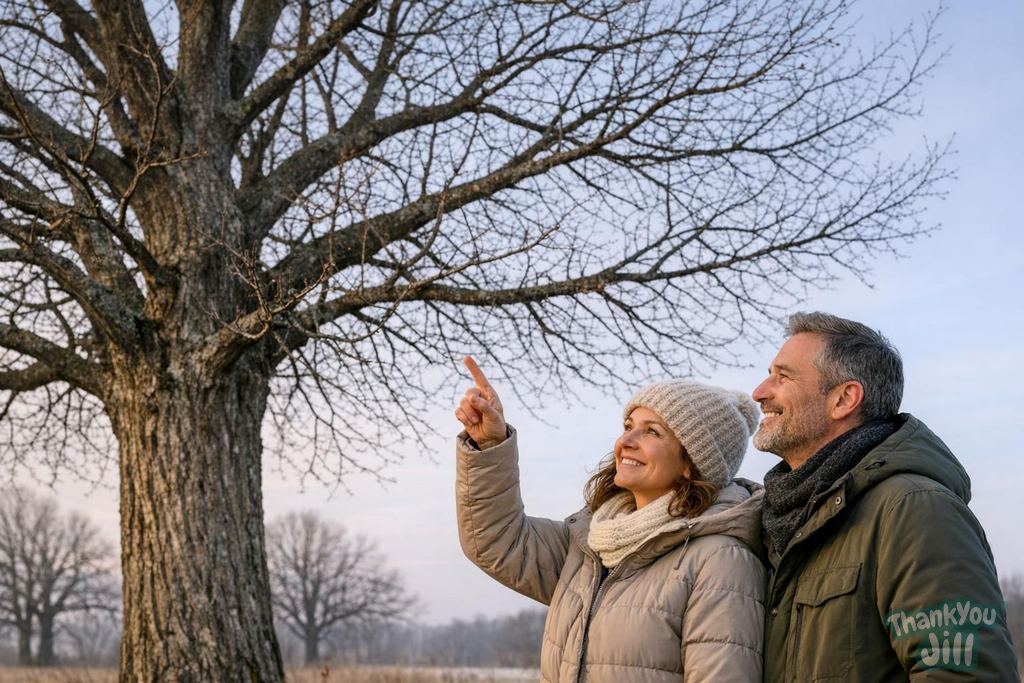
November. The leaves have fallen, the forest is gray and bare. Many walkers feel disoriented: without leaves, how can you tell? Yet experienced naturalists recognize trees in winter almost better than in summer, because the naked structure of a tree reveals its true architecture — the one that leaves hide for eight months of the year.
Crown Shape: The Profile Against the Sky
Looking at a bare tree against the sky, the overall shape of the crown is the first thing you notice. Each species has a characteristic silhouette that doesn't change with the seasons. Oval-cylindrical: the Italian cypress, cypress, and stone pine from a distance. Broad and expansive: the mature oak, mature beech, and plane tree. Regular pyramidal: silver fir, cypress, and young spruce. Flattened umbrella-like: the mature stone pine (the unmistakable shape in Italian coastal landscapes). Weeping (branches drooping downward): weeping willow, weeping birch, weeping ash. Irregular and gnarled: the century-old oak, monumental olive tree. Upright with short, nearly horizontal branches: young to middle-aged beech in closed forests. The silhouette is visible even from great distances: looking at a distant forest in winter, you can already distinguish the dominant species by crown shape alone.
Branch Insertion Angle
The angle at which branches leave the trunk is a very useful diagnostic feature. Nearly horizontal or slightly drooping branches: silver fir (branches like outstretched arms), mature stone pine, and birch (young branches drooping). Branches at 45° ascending: oak, linden, and horse chestnut. Nearly vertical branches: Italian cypress, cypress, and some varieties of sessile oak. Zigzagging branches: elm — the young branches of elm have a characteristic zigzag shape that's very recognizable in winter. Branches with spines: black locust (spines along branch sides), hawthorn (spines on branches), and blackthorn (terminal spines). Spines on bare winter plants are an immediately obvious clue.
Buds: A Book Written Small
Winter buds are one of the most precise identification keys that exist — and very few people know them. Each species has buds with characteristic shape, color, arrangement, and texture. Beech buds: elongated, pointed, bronze-reddish, arranged alternately on branches — elegant, almost like miniature arrows. Oak buds: clustered in a rosette at the branch tip, rounded, rust-colored. Ash buds: black as coal, flattened — unmistakable. Field maple buds: green or greenish-red, opposite (one across from the other) on the branch. Horse chestnut buds: large, sticky, and glossy, dark brown — among the largest in the temperate forest. Cherry buds: clustered at the tip of lateral branches, reddish-brown, glossy. Linden buds: small, asymmetrical, red-green, arranged alternately. The feature of alternate vs. opposite (buds arranged alternately along the branch, like stair steps, vs. opposite, like clasped hands) is one of the easiest to learn and immediately divides most trees into two groups. Opposite buds are typical of: maples, ashes, olive, and horse chestnut. Alternate buds of: oaks, beeches, cherries, chestnuts, walnuts, birches, willows, and poplars.
Color of Branches and Trunks
The color of young branches (those of the current or second year) is also useful for identification. Greenish branches: elm, elderberry, and young ash. Orange-reddish branches: cherry, peach, and blackthorn. Light gray branches: beech and maple. Shiny blackish branches: blackthorn and sea buckthorn. White branches: birch (young twigs are white even before the white bark develops on the trunk). The pith inside the branches is a final clue for doubtful cases: elderberry has soft white pith that's very easy to extract. Walnut has grayish-brown pith with a cellular structure.

A winter forest is not an empty forest. It's a forest that has removed its ornaments and shows its true structure. It's more honest, in a way. And for those who know how to look, it's beautiful precisely like this.
How to Train Your Eye for the Winter Forest: Practical Exercises
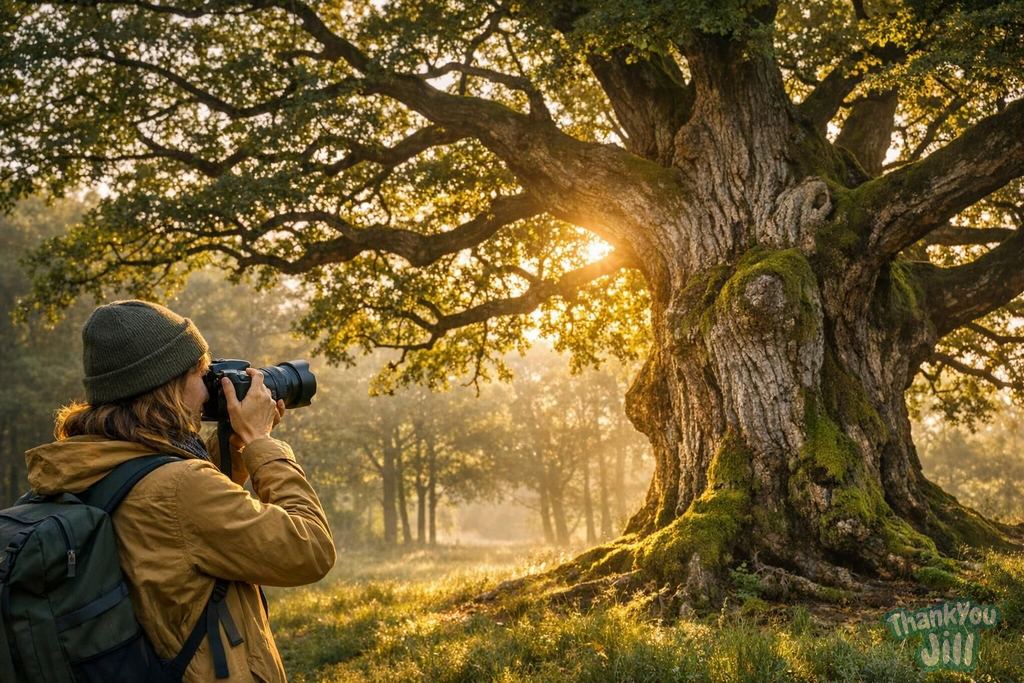
- Photograph the silhouette against the gray sky: position yourself with the trunk in front of you and shoot upward, framing the entire crown against the sky. Backlighting photography highlights the branching structure. Then compare with a winter dendrology manual or the Seek app (the winter version of iNaturalist).
- Learn the buds of the 5 most common species first: beech (elongated, bronze), oak (rosette-shaped, rust), ash (black and flattened), horse chestnut (large, sticky), and maple (opposite, green-red). With these five, you'll recognize most trees in Italian hill forests any month of the year.
- Carry a magnifying glass: buds are clearly visible to the naked eye on lower branches, but a 5x lens reveals extraordinary details: bud scales, fine hairs, and colors. With children, it's a wonderful activity: each bud seems like its own world.
- The blind dendrologist game: walk through a winter forest with your eyes on the ground, then stop, look up, and try to identify the tree in front of you by looking only at shape, branches, and buds — without looking at the bark. Then verify with the bark. Mistakes are part of learning.
- Observe from far and near: silhouette is read from 20-30 meters away. Buds are observed from 30-50 cm. Train your eye to change scale quickly: first the overall profile, then close-up details. It's the same approach a landscape painter uses.
- Take advantage of snowy days: snow on branches highlights tree shape in an extraordinary way. A walk through the forest after a snowfall, with snow drawing the branches in white, is one of the most beautiful times to photograph tree structure.
Learning the winter forest is a gift you give yourself: from November to March, the trees that seemed anonymous and indistinguishable become old friends you recognize from a distance. And when the first leaves emerge in April, the satisfaction of saying I already knew you were a beech is something worth all the effort of winter.
Frequently Asked Questions
How do you identify a tree in winter by observing crown shape?
Crown shape is a key indicator: for example, a young silver fir has a regular pyramidal silhouette, while a weeping willow displays drooping branches. Observing the profile against the sky helps distinguish species even from a distance.
What is the importance of branch insertion angle for identifying bare trees?
Branch angle is diagnostic: nearly horizontal branches indicate silver fir or stone pine, while branches at 45° ascending are typical of oak and linden. Zigzagging or spined branches help identify elm or black locust respectively.
How do you use winter buds to identify tree species?
Buds have characteristic shapes, colors, and arrangements: for example, beech buds are elongated and bronze-reddish, while ash buds are black and flattened. Learning the difference between alternate and opposite buds makes identification easier.
What tools or methods can help improve tree recognition in winter?
Photographing the silhouette against the sky, using a magnifying glass to observe buds, and comparing with specialized guides or apps are effective methods. Exercises like the 'blind dendrologist' game help develop observation skills without relying on bark.


Latest News



Comments
No comments yet. Be the first!
Leave a comment