


 Italiano
 Français
 Deutsch
 Español
 Português
 Svenska
 Suomi
Suomi
Pollinating Insects and Flowering Trees
A forty-million-year evolutionary alliance that feeds the world
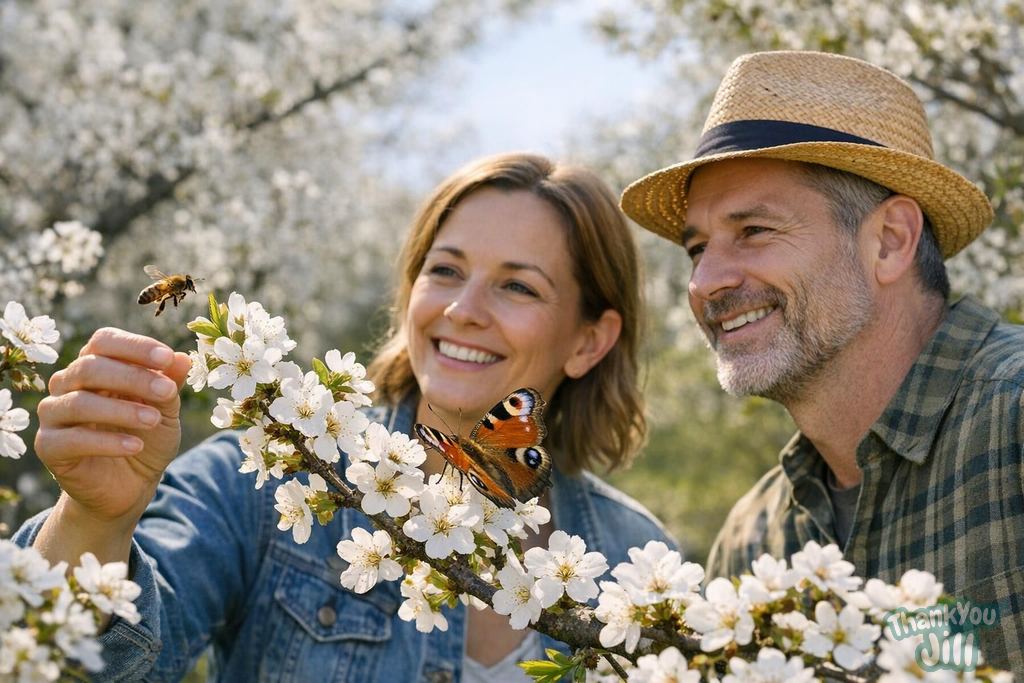
April. The cherry tree is in bloom and the hum of bees is the constant soundtrack of the day. It's not merely aesthetic: it's the sound of an alliance that has lasted 40 million years and produces food for billions of people every year. Without those insects, without that hum, there would be no cherries, apples, pears, almonds, or peaches. The forest of flowers would be beautiful and completely sterile.
How entomophilous pollination works
Most Italian fruit trees (and many forest trees) are pollinated by insects—a process called entomophily. Flowers produce nectar and pollen as food rewards for the insects that visit them. When an insect lands on a flower, it involuntarily collects pollen on its body parts (hairs, legs, head) while feeding on nectar. When it flies to another flower of the same species, it transfers that pollen to the stigmas (the female organs of the flower), enabling fertilization. The fertilized seed develops into fruit. This seemingly simple exchange is the result of millions of years of coevolution: entomophilous flowers have evolved to attract specific pollinators through color (each pollinator perceives different colors), shape (adapted to the body and mouthparts of the target insect), scent (specific molecules perceived from a distance), and flowering time (synchronized with the presence of pollinators). Pollinators have evolved in parallel to better access the resources of the flowers they visit.
The main pollinators of Italian trees
The honeybee (Apis mellifera) is just one of hundreds of pollinator species in Italy, and not always the most important. Wild bees (500+ species in Italy): from tiny andrenid bees that appear in March (often before honeybees) to large bumblebee queens (Bombus spp.) that visit flowers in all weather conditions, including cool mornings that honeybees avoid. Bumblebees are essential pollinators for tomatoes, blueberries, and many fruit plants because they perform "buzz pollination"—they vibrate their wings at a specific frequency that literally explodes pollen from the anthers. Hover flies (flower flies): flies that mimic bees with yellow-and-black stripes. Their larvae are aphid predators; adults feed on nectar and pollen on flowers. They are underrated but essential pollinators for many spring plant species. Butterflies and moths: fragrant flowers with long corollas (wisteria, linden, black locust) are pollinated mainly by lepidopterans with long proboscises. Robber flies and other flies: many flowers with the smell of decomposing flesh (certain umbellifers, some rare plants) are pollinated by flies and robber flies seeking a place to lay eggs. Beetles: pollinators of many ancient plants (magnolia, various shrubs). Beetle-pollinated flowers are often large, white, with abundant pollen and little nectar.
The pollinator crisis: data and causes
Pollinator populations worldwide are declining at an alarming rate. In Europe, between 1990 and 2020, wild bee populations declined by an average of 37%. The main causes are: insecticides (particularly systemic neonicotinoids, which accumulate in pollen and nectar and cause neurological dysfunction in pollinators even at sub-lethal doses); habitat loss (wildflowers along field margins, hedgerows, unmown meadows, shrubby woodlands); monocultures (providing food for only a few weeks, then a floral desert); pathogens and parasites (varroa mites for honeybees, nosema for bumblebees); climate change (desynchronization between tree flowering and pollinator presence). The loss of pollinators has direct economic consequences: in Europe, the economic value of pollination services is estimated at 153 billion euros per year. Without pollinators, production of apples, cherries, strawberries, almonds, tomatoes, and many other crops would collapse dramatically.

The bee doesn't know it's feeding humanity. It only knows there's sweet nectar in the cherry flower. Forty million years ago, this conversation between flower and insect began. Every spring it renews itself. Every year we disturb it, we risk never hearing it again.
How to support pollinators in your garden, orchard, and landscape
- Plant a succession of flowers from February to November: pollinators need food continuously—not just when main crops flower. Create a flowering succession in your garden: crocus and snowdrop (February), prunus and willow (March-April), black locust and linden (May-June), lavender and oregano (July-August), ivy (September-October), hellebore (November-February). This way, no pollinator will find a "food desert" in critical months.
- Don't trim flowering hedges in April: many gardeners trim hawthorn and blackthorn hedges right when they're flowering in March-April—eliminating weeks of food for newly emerged bumblebee queens when they're most vulnerable. Wait until flowering ends (May) for cleanup pruning.
- Leave "low meadows" unmown: even a small area of your garden (even 4-5 m²) left unmown from March to July produces dandelion, clover, wild chrysanthemums, alfalfa—all precious for pollinators. From August 1st you can mow: the most important species have already completed their reproductive cycle.
- Install an insect hotel: bamboo canes (6-8 mm diameter), holes in wood, bundles of hollow elderberry stems—all these structures offer nesting sites for solitary bees (which don't form hives but lay eggs in tubular cavities). A simple structure hung at 1-1.5 m height in a sunny position will be occupied within months.
- With children—the nectar map: in spring, take children to the garden and ask them to follow bees for 10 minutes and note (or photograph) every flower they visit. The "nectar map" of your garden that emerges is a direct demonstration of how pollinators use flowering space. Explain that each flower visit has a double meaning: food for the bee and pollination for the plant.
- Report bee swarms: wild bee swarms seeking a new home are not dangerous if undisturbed. If you find one in your garden, contact a local beekeeper before calling the fire department: a swarm is a community of healthy, genetically valuable bees that deserves to be rescued and relocated, not eliminated.
Pollination is the biological process on which 70% of global agriculture depends. It's not a laboratory fact: every apple you eat, every cherry, every almond—exists because an insect, forty million years ago, found a flower worth visiting. Protecting it is, literally, protecting food.
Frequently asked questions
What is the specific role of bumblebees in pollinating fruit trees?
Bumblebees perform "buzz pollination," vibrating their wings at frequencies that explode pollen from anthers, making them essential pollinators for plants like tomatoes and blueberries, especially in cool weather conditions that honeybees avoid.
How can you tell if a fruit tree is pollinated mainly by insects or wind?
Trees pollinated by insects produce flowers with specific colors, scents, and shapes to attract pollinators, while those pollinated by wind have less showy flowers and produce large amounts of light, airborne pollen.
What are the main causes of the global decline in pollinating insects?
The decline is caused by toxic insecticides like neonicotinoids, loss of natural habitat, monocultures that reduce food availability, parasites like varroa mites, and climate change that desynchronizes flowering and pollinator presence.
How can you encourage pollinators in a garden or orchard?
It's recommended to plant a succession of flowers from February to November to ensure continuous food, avoid mowing hedges and meadows during flowering, install insect hotels, and monitor pollinator visits to support local biodiversity.
Latest News
Comments
No comments yet. Be the first!
Leave a comment