


 Italiano
 Français
 Deutsch
 Español
 Português
 Svenska
 Suomi
Suomi
Wild Tree Fruits
Blackberries, berries, acorns, chestnuts: a guide to safe foraging and use
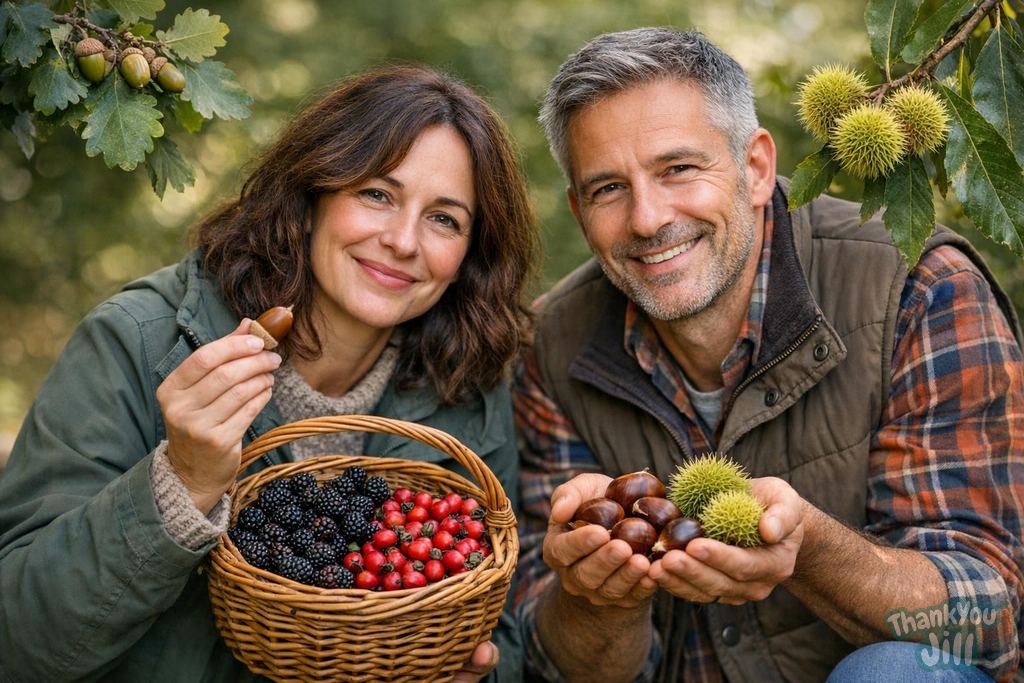
There's a supermarket in the forest that's open year-round and doesn't charge money. No one waits in line. Almost no one goes there. Wild tree and shrub fruits were the foundation of our ancestors' diet for millennia—and today we almost completely ignore them. Yet they're still there, every season, waiting for those who know how to recognize them.
Calendar of Italian wild fruits: season by season
The calendar is the first thing to learn. May-June: wild cherries (Prunus avium)—red or nearly black, smaller than cultivated varieties, flavorful and slightly tart; wild strawberries (Fragaria vesca)—tiny but intensely fragrant, among the finest wild fruits available. July-August: blackberries (Rubus fruticosus)—the easiest to find and pick, perfect for jams, syrups, and liqueurs; wild raspberries (Rubus idaeus) in mountain areas. August-September: bilberries (Vaccinium myrtillus)—in alpine and Apennine conifer forests, rich in anthocyanins; mulberries (Morus nigra and M. alba). September-October: chestnuts—already described; oak acorns—edible after soaking; rowan berries (Sorbus domestica)—only after frost or fermentation, otherwise astringent; cornelian cherries (Cornus mas)—small bright-red drupes, tart and fragrant, excellent for jams and grappa; hawthorn berries (Crataegus monogyna)—cooked into jellies; wild plums/sloes (Prunus spinosa)—only after frost, for liqueurs (the famous English sloe gin). October-November: hazelnuts (Corylus avellana); walnuts—if wild walnut trees grow in nearby forests; wild pomegranates in more southern regions.
The golden rule: certain identification before eating
Before foraging and eating any wild fruit, one rule is absolute: certain botanical identification. There are edible fruits and toxic fruits that look deceptively similar. The dangerous pairs to know: berries of black elderberry (Sambucus nigra) cooked = edible; berries of dwarf elderberry (S. ebulus, a shrub without a woody trunk) = toxic and similar to black elderberry. Berries of rowan (Sorbus aucuparia) cooked = edible; berries of holly (Ilex aquifolium) = toxic but very different (spiny leaves). The black berries of deadly nightshade (Atropa belladonna) vaguely resemble wild cherries but grow on different plants with large, velvety leaves and an unpleasant smell. When in any doubt: don't forage, don't eat. Use an app like PlantNet for confirmation.
How to forage sustainably
Foraging wild fruits is permitted for personal use in most Italian forest areas, but with quantity limits (generally 1-3 kg per day per person, varying by region and species) and with bans in protected areas where foraging requires authorization. The responsible forager's rules: never harvest more than 20-30% of the available fruit on a single shrub—leave the rest for forest animals (who often depend on these fruits for winter). Don't damage branches to reach higher fruit. Don't trample surrounding vegetation. Follow the rule of the last: always leave fruit on isolated or rare shrubs.
The simplest recipes with wild fruits
Blackberry jam is the most accessible recipe: 1 kg of blackberries, 600 g of sugar, juice of half a lemon. Put everything in a pot and cook over medium heat for 30-40 minutes, stirring often. Sterilize jars in the oven at 100°C for 15 minutes before filling. The result is a dark, fragrant jam with a flavor no commercial jam can match. With cornelian cherries, you can make an exceptional syrup (cornelian cherries, water, and sugar in equal measure, strained after cooking) used to flavor water and cocktails. With sloes (after the first frost), you can make sloe ratafià—a traditional liqueur found in every Italian region.

Our grandparents knew the name of every berry, every wild fruit on the field's edge. We lost that knowledge in a single generation. It's not nostalgia: it's practical knowledge that makes us less dependent on supermarkets and more connected to the territory where we live. It's worth recovering.
How to start foraging wild fruits: practical tips
- Start with what you can't get wrong: blackberries, wild strawberries, bilberries—these are unmistakable fruits with no risk of confusion with toxic species, incredibly easy to find throughout Italy. They're the perfect starting point for anyone new to foraging.
- Bring suitable containers: for blackberries and wild strawberries use a wicker basket or rigid container—plastic bags crush the fruit. For chestnuts and acorns a burlap sack works fine. Also bring gardening gloves (blackberries have thorns) and long-sleeved clothing.
- Record your foraging spots: note on your phone (with GPS) the places where you've found rowan berries, cornelian cherries, wild cherries. These "spots" remain productive year after year—over time you'll build your own personal map of wild fruits in your area.
- Learn to identify the correct elderberry: black elderberry (Sambucus nigra) is a precious species—flowers for elderflower syrup, berries (cooked) for jams and herbal teas. But confusion with dwarf elderberry (S. ebulus, the toxic herb-elderberry) is possible. Black elderberry is a shrub/small tree with a persistent woody trunk. Dwarf elderberry dies back to the roots in winter, has herbaceous stems, and leaves with a more pronounced unpleasant smell. Learning this distinction is the priority for anyone wanting to forage elderberries.
- With children—snacking from the forest: organize a summer walk specifically for foraging edible wild fruits. Take children to identify blackberries, wild strawberries, and wild cherries, to pick them and eat them on the spot—cold, freshly picked, tasting of pure nature. It's a food experience that creates bodily memory and connection to the territory in a way no supermarket can replicate.
Italian forests produce tons of wild fruits every year that fall to the ground with almost no one harvesting them. Learning to recognize at least 5-6 edible species means opening direct access to your territory's food resources—something previous generations considered basic knowledge. Reclaiming that knowledge is a small gesture of independence and respect for the forest that nourishes us.
Frequently Asked Questions
What are the safest wild fruits to forage for beginners?
Blackberries, wild strawberries, and bilberries are the easiest and safest wild fruits to identify, with no risk of confusion with toxic species, ideal for anyone new to foraging.
How do you distinguish edible black elderberry from toxic dwarf elderberry?
Black elderberry is a shrub with a persistent woody trunk, while dwarf elderberry has herbaceous stems that die back in winter and leaves with a more pronounced unpleasant smell. This difference is essential to avoid poisoning risks.
What are the main rules for sustainable wild fruit foraging?
Don't harvest more than 20-30% of available fruit on a shrub, always leave fruit for animals, avoid damaging branches or trampling vegetation, and respect quantity limits and protected areas with bans or authorization requirements.
When should you pick rowan berries and sloes to make them edible?
Rowan berries and sloes are astringent or bitter if picked fresh; they should only be harvested after frost or natural fermentation, which improves their flavor and makes them suitable for jams or liqueurs.

Latest News

Comments
No comments yet. Be the first!
Leave a comment