


 Italiano
 Français
 Deutsch
 Español
 Português
 Svenska
 Suomi
Suomi
Herbs, Flowers, and Tree Buds in Herbal Medicine
Linden, Hawthorn, Birch, Larch: Nature's Tree Medicines
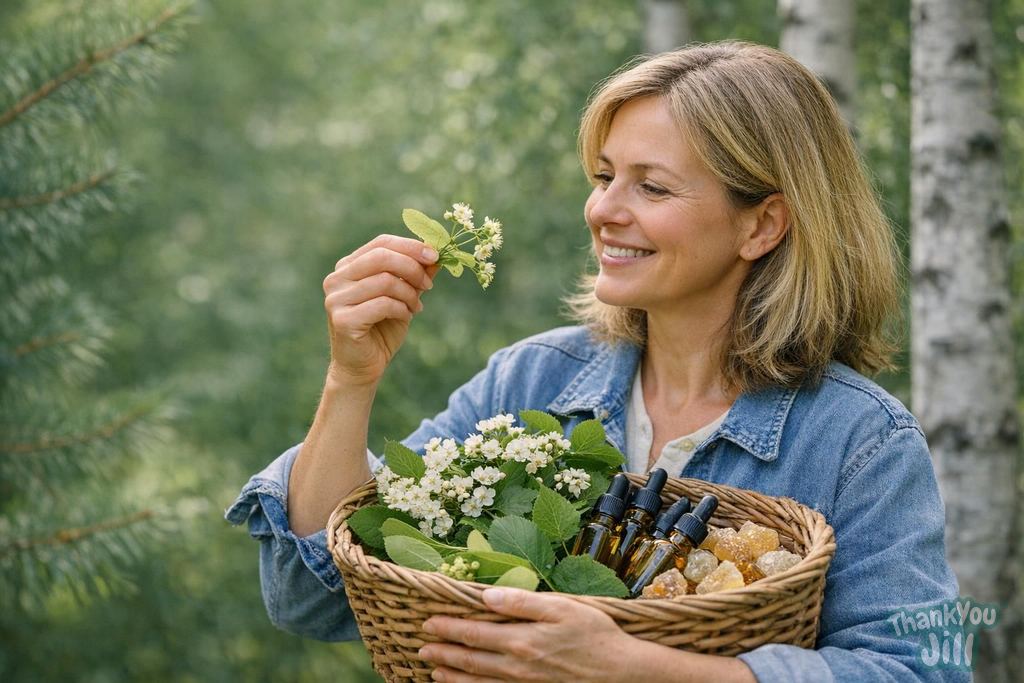
Before synthetic drugs, before modern chemistry, there were trees. Italian forests were the pharmacy of rural communities—and many of those remedies actually worked. Modern phytotherapy research has confirmed the scientific basis of many traditional uses. Not everything our ancestors believed is scientifically valid, but far more is than you might think. Here's a journey through the natural medicines of Italian trees.
Linden: The Traditional and Scientific Herbal Tea
The flowers of linden (Tilia cordata and T. platyphyllos) are among the most studied and validated herbal remedies in European phytotherapy. They contain: flavonoids (quercetin, kaempferol, tiliroside) with anti-inflammatory and antioxidant properties; mucilages that form a protective layer on mucous membranes; essential oil (with farnesol, geraniol) with sedative properties; tannins with astringent properties. The diaphoretic action (stimulates sweating), mild sedative and antispasmodic effects of linden tea are documented by clinical studies. The European Scientific Cooperative on Phytotherapy (ESCOP) has approved the use of linden flowers for upper respiratory tract infections accompanied by fever, for mild insomnia, and for mild anxiety. Collecting and drying linden flowers is simple (see dedicated article in the seasonal chapter). Commercial linden teas are often of lower quality than those prepared with fresh flowers harvested in June.
Hawthorn: The Heart of the Forest
The hawthorn (Crataegus monogyna and C. laevigata) is one of the forest shrubs with the best phytotherapy profile for cardiovascular health. Flowers, leaves, and berries contain: oligomeric proanthocyanidins (OPC)—the most powerful plant antioxidants known; flavonoids (vitexin, hyperoside, rutin) with vasodilatory and cardioprotective effects; organic acids. Clinical studies (including the 2008 Cochrane meta-analysis of over 900 patients) document that standardized hawthorn extract reduces diastolic blood pressure, improves exercise tolerance in patients with mild-to-moderate heart failure, and reduces heart rate. Hawthorn is used in Germany (where phytotherapy has a more robust regulatory status) as a medicine for heart failure class I-II (NYHA). The EMA (European Medicines Agency) has approved hawthorn preparations for mild nervous cardiac symptoms. Caution: never use hawthorn for self-treatment of heart problems without medical consultation—flavonoids can interact with cardiac medications.
Birch: The Classic Detoxifier
Birch (Betula pendula) has a rich and well-documented phytotherapy profile. The leaves contain: flavonoids (hyperoside, quercetin) with antioxidant and anti-inflammatory effects; saponins with diuretic effects (increased urine production); methylbutanol and other terpenes. Gemmotherapy (use of glyceric macerates of young buds—see below) uses birch buds as a renal and lymphatic draining agent. The decoction of birch leaves has a documented diuretic action—it significantly increases urine production without altering kidney filtration (it is considered an "aquaretic diuretic," which increases urine volume without loss of minerals). Traditionally used for treating mild urinary tract infections and for preventing kidney stones. ESCOP has approved birch leaves as supportive treatment for mild urinary tract infections.
Gemmotherapy: The Medicine of Buds
Gemmotherapy (or bud therapy) is a phytotherapy discipline developed in the twentieth century that uses glyceric macerates of buds (unopened flower clusters), meristems, and young roots of trees and shrubs as remedies. The underlying theory is that buds contain the highest concentrations of growth factors (gibberellins, auxins, cytokinins) and active secondary metabolites. The larch (Larix decidua) is one of the most used gemmotherapy remedies: the glyceric macerate of young larch buds is used as an immune stimulant, mild antidepressant, and for chronic fatigue syndromes. The olive (Olea europaea)—buds and young leaves—is used as a mild blood pressure reducer and mild blood sugar lowerer. Gemmotherapy remains on the margins of rigorous scientific research—most indications are based on empirical and traditional evidence, with limited clinical studies. It should be used with critical judgment and never as a substitute for established medical therapies.

Trees don't have a pharmaceutical industry lobbying on their behalf. Linden flowers can't be patented. Perhaps that's why tree-based herbal medicine has been systematically undervalued for a century. Yet linden calms, hawthorn protects the heart, birch purifies. Our grandparents knew this. Science is slowly confirming it.
How to Use Tree-Based Herbal Medicine Consciously
- Homemade linden tea: Collect linden flowers in June when they've just opened (maximum 50% open). Dry them in a thin layer on paper towels, away from light, for 5-7 days. Store in dark glass jars with tight lids. For tea: 2-3 grams of dried flowers (about one teaspoon) per 200 ml of water at 90°C, steep for 8-10 minutes, strain. Sweeten with linden honey if you like. 1-3 cups daily.
- Standardized hawthorn extract: For medicinal use (not as a simple tea), use standardized extracts in tablets or drops with declared concentration in OPC or vitexin. Follow the manufacturer's instructions. Never use hawthorn if you're already taking digoxin or other cardiac medications without consulting your doctor.
- Birch leaf infusion as a diuretic: 2-3 grams of dried birch leaves per 200 ml of boiling water, steep for 10 minutes. Drink 2-3 cups daily for no more than 4 weeks, always accompanied by plenty of water (the diuretic only works if you drink enough). Don't use if you have serious kidney problems or are taking diuretics.
- Consult a phytotherapist: For serious medicinal uses, see a doctor with herbal medicine training. Italy has recognized herbal medicine schools and doctors who integrate phytotherapy into clinical practice. The Italian Society of Phytotherapy (SIFITO) maintains a list of trained professionals.
- With children—a garden of tree medicines: Create a small corner of your garden with traditional medicinal plants from Italian trees: a hawthorn shrub, a small elderberry, a few sprigs of rosemary (not a tree but an aromatic shrub with similar properties). Tell the children the story of each plant and its traditional use. It's a course in medical history and applied botany combined.
The forest pharmacy doesn't replace modern medicine. But it complements it, enriches it, and reminds us that before synthetic laboratories there was the forest—with its herbal teas, its extracts, its spring bud macerates. Understanding this natural pharmacy is part of knowing the Italian forest—knowledge backed by two thousand years of practice.
Frequently Asked Questions
What are the main properties of linden flowers in herbal medicine?
Linden flowers have anti-inflammatory, antioxidant, sedative, and antispasmodic properties. They are used to calm mild anxiety, promote sleep, and treat upper respiratory tract infections with fever, as confirmed by clinical studies and ESCOP approvals.
How does hawthorn work on cardiovascular health?
Hawthorn contains powerful antioxidants and flavonoids that improve heart function, reduce diastolic blood pressure and heart rate. It is used for mild-to-moderate heart failure, but should only be taken under medical supervision to avoid interactions with cardiac medications.
When is it advisable to use gemmotherapy from trees like larch?
Gemmotherapy with larch buds is indicated as an immune stimulant, mild antidepressant, and for chronic fatigue syndrome. However, it is based on traditional evidence and limited clinical studies, so it should be used with caution and not as a substitute for established medical therapies.
How to prepare and use birch leaf infusion as a natural diuretic?
For a birch infusion, use 2-3 grams of dried leaves in 200 ml of boiling water, steeping for 10 minutes. Drink 2-3 cups daily for a maximum of 4 weeks, accompanied by plenty of water. It is not recommended if you have serious kidney problems or are taking diuretics.
Latest News


Comments
No comments yet. Be the first!
Leave a comment