


 Italiano
 Français
 Deutsch
 Español
 Português
 Svenska
 Suomi
Suomi
The Bark Beetle
The tiny beetle that is killing weakened Alpine forests
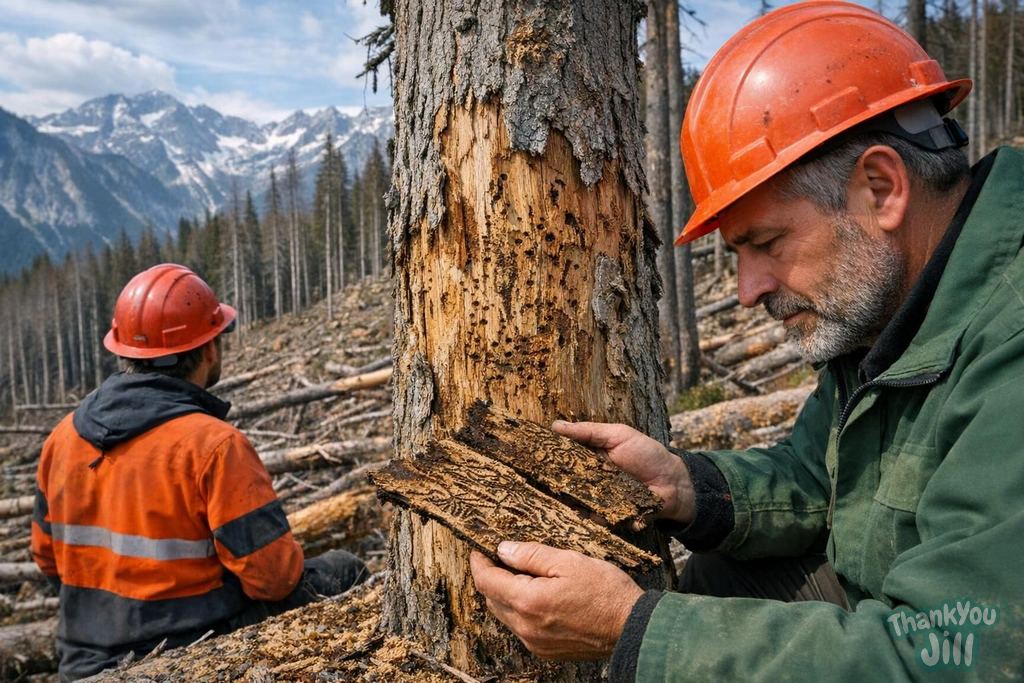
October 2018. The Vaia storm fells 42 million trees across the eastern Italian Alps—Veneto, Trentino, Friuli—in just three days. It's the largest forest catastrophe in recent Italian history. The Alpine landscape is transformed—stretches of shattered trunks, entire mountainsides stripped bare. Then comes the second disaster, invisible: the bark beetle. An insect just 5 millimeters long that finds in millions of felled logs a paradise of fresh wood to colonize—and then, its populations exploding exponentially, it spreads to the living trees still standing. And kills them.
What is the bark beetle?
The bark beetle (Ips typographus) is a small scolytid beetle measuring 4–5.5 mm, with an almost anonymous appearance—dark brown, cylindrical. It lives beneath the bark of conifers (mainly Norway spruce, Picea abies) where it tunnels to lay eggs. The name "typographus" comes from the characteristic ladder-like pattern of larval galleries that resemble the page of a typographic book, with the maternal gallery running vertically and larval galleries running perpendicular. The bark beetle is an indigenous species of Alpine forests—it has always existed, in balance with its host plants. Under normal conditions, healthy firs resist attack by producing resin in abundance, which traps and kills the boring larvae. But when trees are stressed—by drought, mechanical injury, or storms—resin production decreases and the bark beetle can penetrate. In a weakened tree, the beetle tunnels, deposits eggs, and larvae consume the phloem (the tissue that transports sugars) in a circular pattern—interrupting nutrient flow between leaves and roots and causing the tree's death within months.
From the Vaia storm to the bark beetle epidemic
After Vaia (October 2018), the 42 million felled logs became an enormous reserve of fresh wood—the ideal substrate for bark beetle reproduction. Populations exploded exponentially during the warm seasons of 2019–2022. The Norway spruce forests of the eastern Alps, already weakened by increasingly intense summer droughts, couldn't resist attacks from such massive populations. In 2019–2023, an estimated 150,000–200,000 hectares of Alpine forest were affected by the bark beetle epidemic following Vaia, with millions of Norway spruces dead across Veneto, Trentino, and Friuli. Forest management faced a dramatic dilemma: rapidly harvest infested wood (to reduce bark beetle populations) or leave it standing as deadwood (which has enormous ecological value but fuels the epidemic). There is no simple answer.
The role of climate change: drought as a trigger
The relationship between the bark beetle and climate change is direct and well-documented. Alpine Norway spruce forests increasingly suffer from prolonged summer droughts

The bark beetle is not the problem. It's the symptom. The problem is drought, the storm, the monoculture spruce forest planted unnaturally at too-low elevations. The bark beetle simply does what natural selection has taught it to do: colonize the weak. The fault is not its own.
How Alpine forests are adapting: management and restoration actions
- Visit post-Vaia and post-beetle areas: if you visit the Veneto or Trentino Dolomites, many of the affected areas are accessible via trails with interpretive signs explaining what happened and how natural regeneration is progressing. The Dolomiti Bellunesi National Park and Stelvio National Park have thematic routes through post-disturbance areas. Seeing the forest regrowing spontaneously among felled trunks—with willows, birches, rowans, and young spruces—is one of the most interesting and educational landscapes in the Alpine arc.
- Understand the difference between ecological deadwood and active bark beetle hotspots: deadwood from storm-felled conifers can be: an active bark beetle hotspot (logs with beetles still in breeding phase—recognizable by round exit holes of adults and bark peeling away with fresh galleries visible) or already "consumed" wood (the beetle has exited, galleries are old, bark is dry). Consumed wood has lost its hotspot function and gained great ecological value as habitat for wood-dependent species.
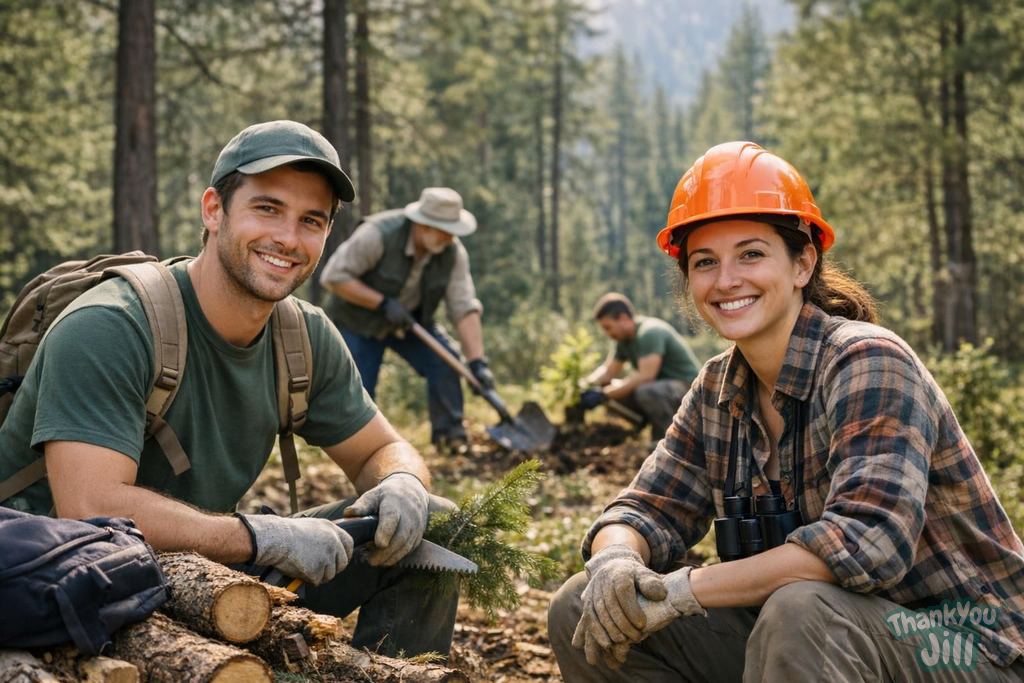
- Support diversified reforestation: the long-term answer to bark beetle epidemics is converting monoculture spruce forests (unnatural at low elevations) into mixed forests with silver fir, beech, larch, rowan, and maple—more resilient to bark beetles and droughts. Many Alpine municipalities and National Parks have diversified reforestation programs open to volunteer participation.
- With children—the regrowing forest: the post-Vaia landscape offers an extraordinary educational opportunity: seeing storm-felled trunks and new trees growing spontaneously among them side by side is a living lesson in ecosystem resilience. The message isn't catastrophic: the forest destroys and regrows. It has always been this way. The storm is part of the cycle. The problem is when frequency and intensity increase too much for the ecosystem's recovery capacity.
The bark beetle, the Vaia storm, Alpine drought—these are chapters in a larger story that concerns all of us: how climate change transforms the forests we've known into something different. Not necessarily worse—but different. Understanding this story means understanding that forests aren't static: they're dynamic systems that adapt, collapse, and rebuild. Our task is not to accelerate the collapse and to leave space for rebuilding.
Frequently Asked Questions
How can you tell if a tree has been attacked by the bark beetle?
A tree attacked by the bark beetle shows round exit holes of adults on the bark, which often peels away, and fresh galleries beneath the bark. These signs indicate the presence of larvae tunneling and consuming the phloem, compromising the tree's health.
What is the link between climate change and increased bark beetle epidemics?
Climate change causes prolonged summer droughts that weaken Norway spruces by reducing resin production, their natural defense. Additionally, warming allows the bark beetle to have more generations per year, accelerating population growth and increasing epidemic frequency.
When is it worthwhile to intervene by harvesting bark beetle-infested wood?
Rapid harvesting of infested wood can reduce bark beetle populations and limit the epidemic, but leaving deadwood has ecological value. The decision depends on balancing insect control with conservation of natural habitats, with no simple or one-size-fits-all solutions.
How should you choose species for reforestation after a bark beetle epidemic?
It's recommended to replace monoculture spruce forests with mixed forests including silver fir, beech, larch, rowan, and maple. This diversification increases forest resilience to droughts and bark beetle attacks, promoting greater long-term ecological stability.
Latest News


Comments
No comments yet. Be the first!
Leave a comment