


 Italiano
 Français
 Deutsch
 Español
 Português
 Svenska
 Suomi
Suomi
Homemade Broth from Kitchen Scraps
Recipe and Benefits
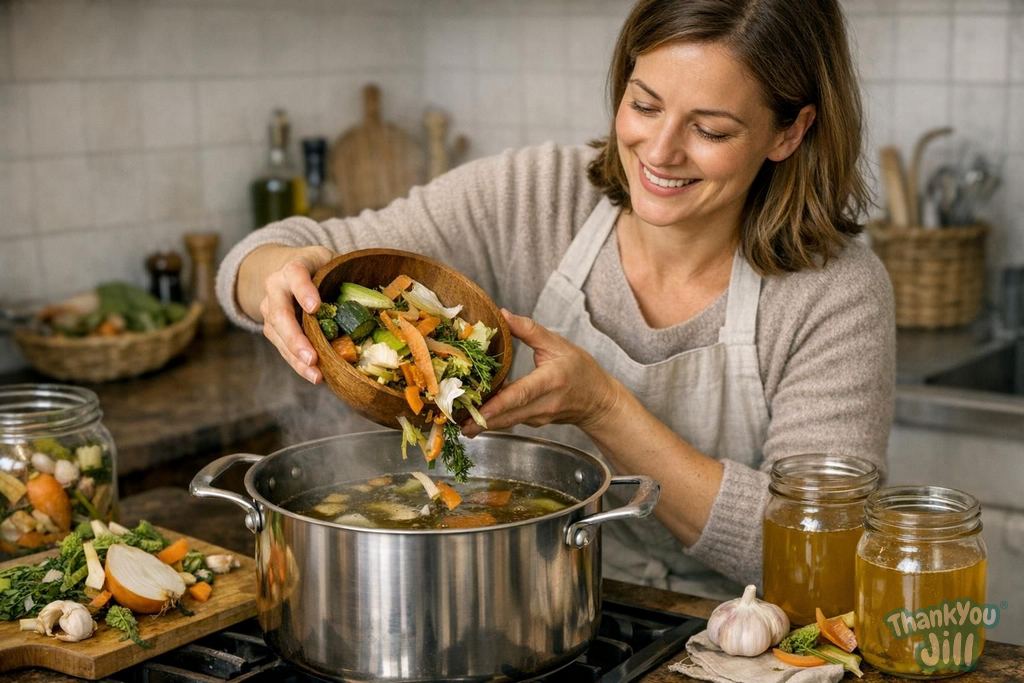
Broth is the foundation of all great cooking: risottos, soups, stews, sauces. Homemade broth made with fresh ingredients or quality scraps is incomparably superior to store-bought bouillon cubes in flavor, aromatic complexity, and nutritional profile. Yet most Italian families rely on bouillon cubes. Scrap broth is the practical answer to this contradiction: you use what you would have thrown away anyway, it requires minimal active work (just time), and produces an extraordinary result.
Bone Broth: Natural Collagen and Minerals
Bone broth (the English term for what's become a popular superfood) is the richest version of classic broth: bones with cartilage (knuckles, joints, chicken feet, oxtail, short ribs) simmered for 8–24 hours over very low heat release hydrolyzed collagen, glycine, proline, calcium, phosphorus, and magnesium. Homemade bone broth doesn't have the miraculous effects some trendy diets claim (collagen is digested like any other protein), but it's an excellent food rich in amino acids (glycine and proline are the main components of cartilage and skin), bioavailable minerals (calcium, phosphorus), gelatin (which gives body and silkiness to dishes), and natural glutamate (umami flavor). How to make bone broth at home: collect bones in your freezer for weeks (each whole chicken produces an excellent carcass—freeze until you've gathered 2–3 carcasses). Add 2 tablespoons of apple cider vinegar (acidity better extracts minerals from bones). Cover with cold water, bring to a boil, skim, then reduce to the absolute lowest heat. Simmer 8–12 hours for chicken, 12–24 hours for beef bones. Strain. Store in the fridge (it will gel—that's a good sign) or freeze.
Vegetable Scrap Broth: Free and Extraordinary
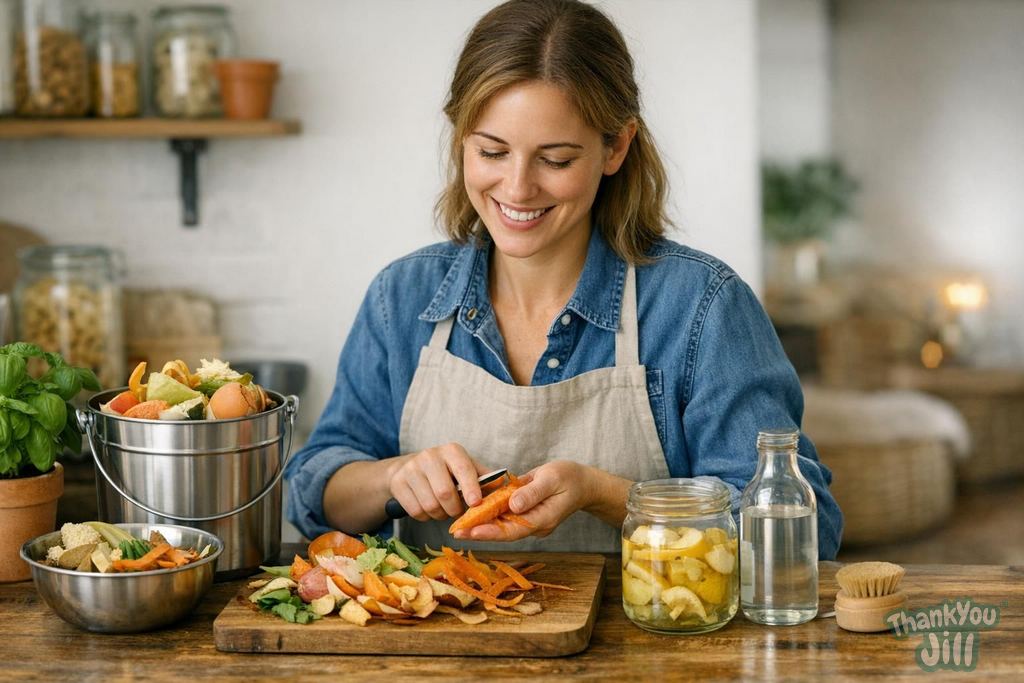
As described in the previous article on vegetable peels, scrap vegetable broth uses everything that would otherwise end up in the compost. Basic recipe: collect in a freezer bag over 1–2 weeks: golden onion skins (they give the broth its golden color), celery stalks and leaves, carrot peels, parsley stems and dark leaves, outer leek leaves, dried mushroom stems (intensely flavorful), zucchini pieces, bay leaves, peppercorns, cloves. Put everything in a pot with cold water (2–3 liters for a medium bag), bring to a gentle boil, simmer 45–60 minutes, strain. The result: a golden, vegetable-forward, complex broth that costs nothing. Adding a teaspoon of white miso at the end of cooking (don't cook it—stir it into the hot broth off the heat) transforms vegetable broth into something extraordinary with a deep umami flavor.
Fish Fumet from Fish Bones
Fish fumet is the base for seafood risottos, fish soups, and pasta with seafood sauces. You'll need: heads, bones, and trimmings from white fish (cod, sea bass, gilt-head bream—never oily fish: it makes the fumet bitter), shellfish shells if available. Every time you cook a whole fish, never throw away the head and bones—freeze them. When you have enough: sliced onion + celery + parsley + white wine + fish and bones + cold water. Bring to a boil, reduce heat, simmer 20–25 minutes maximum (fumet becomes bitter if cooked too long). Strain carefully. Fumet keeps in the fridge for 2 days or frozen in ice cube trays for 3 months.
Homemade Bouillon: How to Make and Store It
For those without time to make fresh broth every time, you can prepare "homemade bouillon"—a concentrated vegetable and herb paste that keeps in the fridge for months. Recipe: blend together onion (200g), carrot (100g), celery (100g), plenty of parsley, dried tomato (30g), and coarse salt (100g—salt is the natural preservative). The consistency should be like pesto. Store in a glass jar in the fridge. Use 1 teaspoon per 500 ml of water. This bouillon has no added MSG, no palm oil, no additives—just the true taste of vegetables. It costs very little, takes 10 minutes to make, and lasts 3–4 months in the fridge.

Broth isn't what comes in a supermarket packet—it's liquid gold you make at home from Sunday's chicken bones, the week's vegetable peels, the parsley stems you were about to throw away. It takes 10 minutes to prepare and 2 hours to simmer on its own. Risotto made with that broth speaks a different language than risotto made with water and a bouillon cube. The time it takes is a gift you give yourself.
Chicken Carcass: The Best Broth You Can Make
Every time you roast a whole chicken, the leftover carcass is the foundation for the best chicken broth you can make. Method: remove any remaining meat (save it for tomorrow's lunch), put the carcass with any bones in a large pot, add a whole onion, celery, carrot, parsley, peppercorns, juniper berry, bay leaf, and a tablespoon of apple cider vinegar. Cover generously with cold water, bring to a gentle boil, skim off the gray foam that rises (coagulated albumins—they don't affect flavor but make broth cloudy if not removed), reduce to the lowest heat, and simmer 2–3 hours. Optimal chicken broth should barely tremble (not boil—boiling agitates the proteins and clouds the broth). Strain, discard the bones and vegetables (completely stripped of nutrients now—they go to compost). Cool and drain excess fat (it solidifies on the surface in the fridge—easy to remove).
Using Broth Instead of Oil for Lighter Cooking
Broth can partially or completely replace oil in many cooking methods, reducing calories while adding flavor. Soffritto: start with onion and celery in a tablespoon of oil, then add a few tablespoons of broth to continue cooking without adding more oil. The flavor is richer, the calories lower. Risotto: instead of finishing with all butter, use half butter and half reduced broth—similar result, lighter. Sautéed vegetables: instead of cooking them only in oil, add broth halfway through—they soften without burning and absorb the broth's flavor.
How to Label and Organize Broths in the Freezer
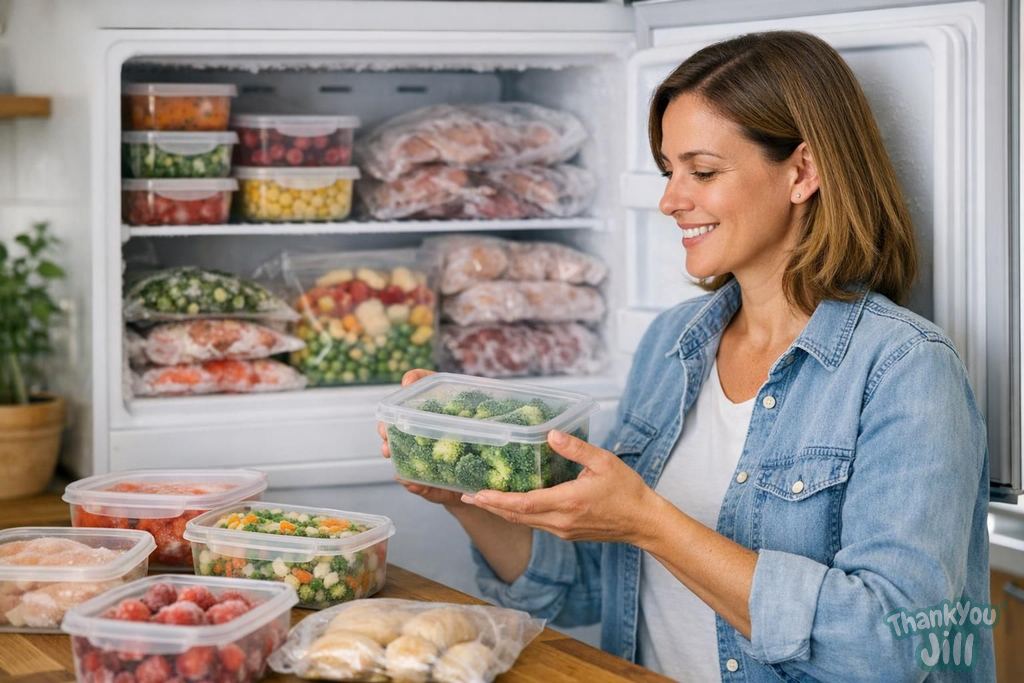
Frozen broths are the most underrated resource in zero-waste cooking. Practical organization: use 500 ml containers for standard portions (one cup = base for 1 risotto serving or 2 soup servings), or ice cube trays for concentrated cubes (1 cube = 30–40 ml—useful for sauces and dressings). Mandatory labeling with masking tape: type of broth (chicken, vegetable, fish, beef) and preparation date. Broths keep 3–6 months in the freezer. Thaw in the fridge overnight or in a water bath—never in the microwave (it changes the gelatin's structure). With 4–5 containers of different broths always in the freezer, weekly cooking becomes much faster and much more flavorful.
Frequently Asked Questions
What are the nutritional benefits of bone broth compared to store-bought bouillon?
Bone broth is rich in amino acids like glycine and proline, bioavailable minerals like calcium and phosphorus, natural gelatin, and glutamate that provides umami flavor. It offers a superior nutritional profile and more complex flavor than store-bought bouillon cubes.
How do you make vegetable broth using kitchen scraps?
Collect vegetable peels and stems like onion, carrot, celery, parsley, and dried mushrooms, put them in cold water, bring to a gentle boil, and simmer for 45–60 minutes. Strain and, if you like, add white miso at the end of cooking for a more intense umami flavor.
When is it worth making homemade broth instead of using store-bought bouillon?
Homemade broth is worth making to get richer, more natural flavor and a better nutritional profile while reducing additives and waste. It's ideal for those who want to cook healthily, economically, and sustainably, making the most of scraps and fresh ingredients.
How do you store and organize homemade broths for practical kitchen use?
Freeze broths in 500 ml containers or in ice cube trays for 30–40 ml cubes. Always label with broth type and date. They keep 3–6 months. Thaw in the fridge or in a water bath, avoiding the microwave to preserve the gelatin and quality.
Latest News




Comments
No comments yet. Be the first!
Leave a comment