


 Italiano
 Français
 Deutsch
 Español
 Português
 Svenska
 Suomi
Suomi
Food Packaging
Safe and Sustainable Materials
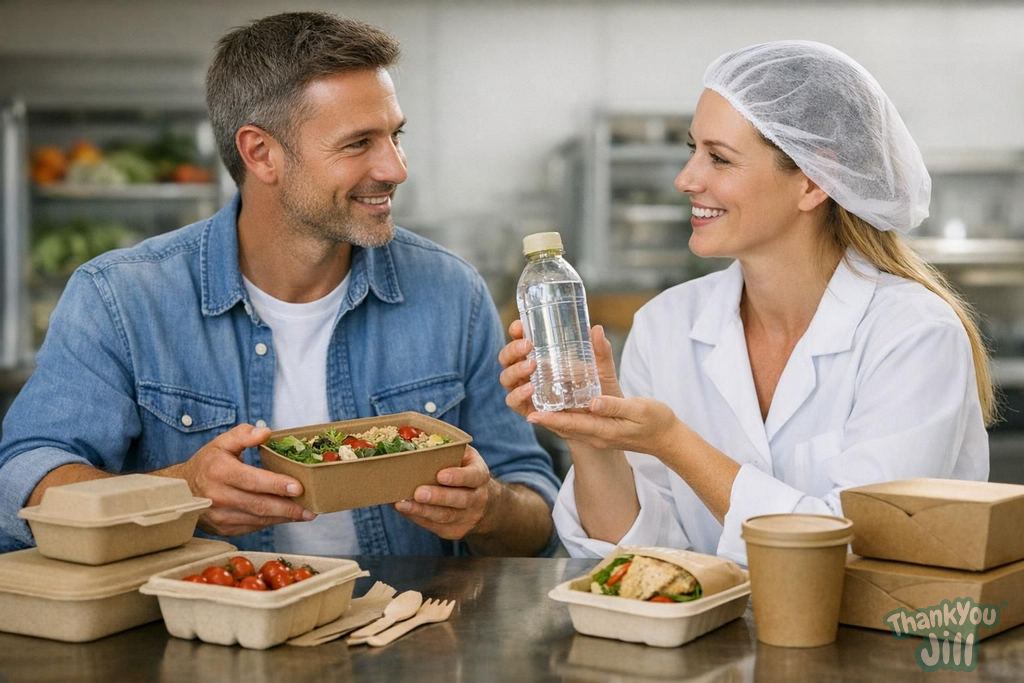
Food packaging serves two fundamental purposes: protecting food safety and quality (acting as a barrier against contaminants, oxygen, moisture, and light) and communicating information to consumers. It's impossible to eliminate it completely without compromising food safety. But you can choose better materials: safer for your health (without substances that migrate into food), more environmentally sustainable (recyclable, biodegradable, with lower carbon footprint), and reduce unnecessary packaging.
Glass: the safest and most sustainable material
Glass is the food packaging material with the best health characteristics: it releases no substances into food (it's chemically inert), it's biologically inert (it doesn't harbor bacteria), it's 100% recyclable infinitely without loss of quality, and it perfectly preserves the flavor of food (no aroma transfer). Glass's limitations: high weight (increases transport emissions), fragility (risk of breakage in the supply chain), high energy consumption in production (though recycling significantly reduces this impact). Recycled glass (cullet): produces new containers using 40% less energy than virgin glass. In Italy, the glass recycling rate exceeds 70%: one of the highest in Europe. For your health: buying and storing food in glass instead of plastic is always the better choice.
Plastic in food packaging: not all the same
Plastics used in food packaging are classified with a number from 1 to 7 inside the triangular recycling symbol. The most common: PET (1, polyethylene terephthalate): water and beverage bottles, fruit containers. Recyclable. Can release antimony and acetaldehyde if exposed to heat or UV: avoid leaving plastic bottles in the sun. HDPE (2, high-density polyethylene): milk bottles, detergent containers. Very stable, safe, recyclable. PVC (3, polyvinyl chloride): clear food films, some bottles. Contains plasticizers (phthalates) that can migrate into food at high temperatures or with fatty foods: avoid direct contact with hot or fatty foods. LDPE (4, low-density polyethylene): food bags, kitchen wrap. Fairly safe, rarely recycled. PP (5, polypropylene): yogurt containers, microwave-safe cups, caps. The safest among common plastics: heat-stable, doesn't release bisphenol. PS (6, polystyrene): meat trays, disposable cups, utensils. Contains styrene (potentially carcinogenic): avoid for hot foods. Rarely recycled. Polycarbonate with BPA (7): some older reusable containers. BPA (bisphenol A) is an endocrine disruptor: plastic containers with BPA have been progressively eliminated from the European market (banned in baby bottles since 2011, for all food contact since 2022).
Aluminum: lightweight, recyclable, but with caveats
Aluminum is the packaging material with the best environmental profile after glass, provided it's recycled: aluminum recycling uses 95% less energy than production from bauxite. Beverage cans, aluminum foil, aluminum coffee capsules: all recyclable if collected correctly. The caveat: virgin aluminum production from bauxite is very energy-intensive and causes environmental damage in extraction areas (Guinea, Australia, Brazil). So: if aluminum is recycled, it's excellent; if it ends up in landfill, the environmental balance is negative. Aluminum cans have one of the highest recycling rates in Italy: over 85%. Paper and cardboard: an excellent alternative to plastic packaging when protecting dry foods (pasta boxes, cereals, biscuits). Easily recyclable. Cardboard laminated with plastic (like Tetra Pak) is more complex to recycle: it's neither paper nor plastic but a combination of both and aluminum.
Tetra Pak and composite materials: the multi-material problem
Multi-layer containers (Tetra Pak and similar) combine cardboard (75%), polyethylene (20%), and aluminum (5%) in layers glued together. This makes recycling technically possible but more complex and costly than pure materials. In Italy, Tetra Pak recycling is possible thanks to specialized facilities, but the collection rate is lower than pure paper or glass. How to dispose of it: in many Italian cities, Tetra Pak is collected separately (yellow plastic bag or separate collection: check with your municipality). Initiatives like Tetracycle (by Tetra Pak itself) allow you in some cities to bring containers to dedicated collection points. Cellulose fiber recovered from recycled Tetra Pak is used to produce paper, building panels, and other materials.

Glass isn't a nostalgic relic of the past: it's the safest and most recyclable packaging material that exists. PP is the only plastic you can heat without worry. PVC is the material to always avoid. Knowing these three facts changes many daily choices without requiring sacrifice: just keep your eyes open on the labels.
How to read plastic recycling symbols
The triangle with arrows and a number in the center indicates the type of plastic. In Italy, the text below the triangle also indicates the separate collection code. How to navigate: look for the number. 1 (PET) and 2 (HDPE): recyclable in plastic in almost all of Italy. 4 (LDPE) and 5 (PP): recyclable in many cities. 3 (PVC) and 6 (PS): rare dedicated collection, often goes in general waste. 7 (others): heterogeneous, often not recyclable locally. The practical solution: at the supermarket, when choosing between products, select the packaging with the smallest number or glass.
Your quick guide to safe materials for storing food
Completely safe: glass (preserves, jars, fridge containers), stainless steel (pots, containers, water bottles), lead-free glazed ceramic (containers, baking dishes), parchment paper (cooking). Safe with moderation: PP (5) for the microwave, aluminum (not in contact with acidic foods like tomato or vinegar: forms oxalates). Avoid with hot or fatty foods: PET (1), PS (6), PVC (3). Avoid: any plastic container with BPA (pre-2022, especially hard and clear ones), PVC wrap in direct contact with fatty foods. For everyday use: gradually replacing plastic containers in your fridge with glass containers is the simplest and most impactful change to reduce exposure to potentially problematic substances.
Compostable bioplastics: between promises and reality
Compostable bioplastics (PLA, mater-bi, PBAT) are materials derived from renewable sources (corn, potatoes, sugarcane) designed to degrade under industrial composting conditions. Are they really compostable? Yes, but only in industrial composting facilities that reach temperatures of 55-65°C. They don't degrade in home composting (too cold), don't degrade in the ocean in reasonable timeframes, and aren't recyclable with conventional plastic (they contaminate the collection stream). The "compostable" fruit bag that ends up in the plastic recycling bag contaminates the stream. The real problem: few Italian municipalities have adequate facilities for industrial composting of bioplastics. In many areas, these bioplastics end up in general waste (= incinerator or landfill) despite the "compostable" label. Bioplastic makes sense only where the correct disposal infrastructure exists: check with your municipality before considering it virtuous.
Frequently Asked Questions
What are the safest food packaging materials for health and why?
Glass is the safest material because it's chemically inert, releases no substances into food, and doesn't harbor bacteria. Among plastics, polypropylene (PP) is the most stable and safe, while PVC, PET, and PS can release harmful substances especially when in contact with hot or fatty foods.
How do you know if a plastic container is safe for hot foods or the microwave?
Check the recycling symbol with the number: PP (5) is safe for the microwave and hot foods, while PVC (3), PET (1), and PS (6) should be avoided with hot or fatty foods because they can release harmful substances. Also avoid plastic with BPA, now banned in new products.
When is it worth choosing aluminum packaging for food and what are its environmental limitations?
Aluminum is excellent if recycled, since recycling consumes 95% less energy than production from bauxite. However, virgin aluminum production from bauxite is very impactful and harmful to the environment, so it's better to prefer recycled aluminum and ensure it's properly collected and recycled.
What happens if you dispose of compostable bioplastics in traditional plastic recycling?
Compostable bioplastics contaminated in conventional plastic recycling make recycling more difficult and can compromise the quality of recycled material. They're only compostable in specific industrial facilities, so it's important to dispose of them correctly according to local guidelines.
Latest News




Comments
No comments yet. Be the first!
Leave a comment