


 Italiano
 Français
 Deutsch
 Español
 Português
 Svenska
 Suomi
Suomi
Global Movements for Tree Rights Around the World
Stories, battles, and victories in the fight to protect trees
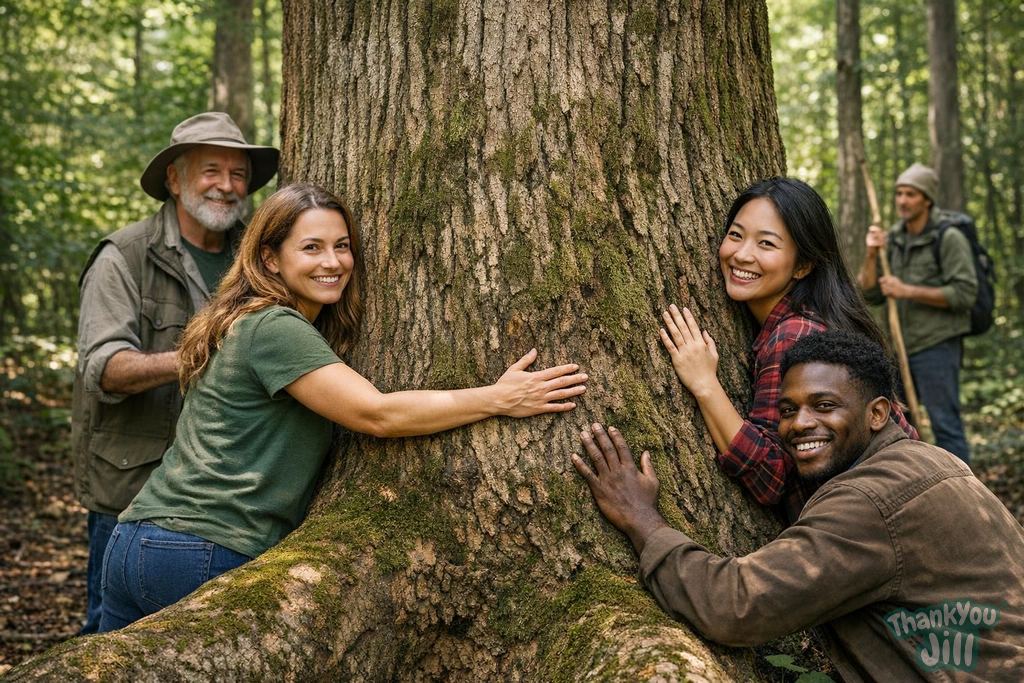
In 2017, the New Zealand Parliament passed a law granting the Whanganui River legal personhood—the same legal status as a person or corporation. The river can be represented in court by two guardians (one Māori, one from the Crown). This isn't science fiction: it's living law. It's part of a growing global movement demanding that legal rights be extended to natural ecosystems—including trees and forests. A cultural and legal revolution taking concrete form in dozens of countries.
Rights of Nature: From Concept to Law
The concept of Rights of Nature was first formalized by American legal scholar Christopher Stone in his essay Should Trees Have Standing? (1972)—a provocative text asking why natural objects (trees, oceans, forests) couldn't have legal rights, just as corporations have enjoyed them for centuries. The idea remained theoretical for decades. Then, in 2008, Ecuador became the first country in the world to enshrine the rights of nature in its Constitution (articles 71-74): Pachamama (Mother Earth in Andean cosmology) has the fundamental right to exist, to be maintained, and to regenerate. Since 2008, several cases have been brought before Ecuadorian courts invoking the constitutional rights of nature, with mixed but symbolically important results. In 2010, Bolivia passed the Law of the Rights of Mother Earth, recognizing seven fundamental rights of nature, including the right to life, to biodiversity, to water, to clean air, and to regeneration. In Colombia, the Supreme Court recognized the Colombian Amazon rainforest as a subject of rights in 2018—a landmark ruling that obligated the government to develop a plan to protect the Amazon.
Battles for Specific Trees: Emblematic Cases
At local and national levels, there are hundreds of battles to protect individual trees or groups of trees. Some of the most notable: The campaign for Glasgow's elm (2007): a single oak tree in central Glasgow became the symbol of a civic battle against a development project that would have felled it. The petition gathered 20,000 signatures in a week; the tree still stands. The battle for the oaks on Via Assarotti in Genoa (2018): century-old oaks along a historic avenue threatened by road work. Civic mobilization led to the project being modified. The Standing Rock protest (USA, 2016-2017): Sioux indigenous nations opposed the construction of the Dakota Access Pipeline, which threatened sacred waters and ritual trees. Though lost legally, the battle became a global symbol of the defense of indigenous rights and nature. In Italy, numerous local committees have formed to defend specific trees threatened by construction or road projects—with success rates that vary but are growing as public awareness increases.
The International Movement: Organizations and Initiatives
The Global Alliance for the Rights of Nature coordinates the international movement, based in Ecuador. The Community Environmental Legal Defense Fund (CELDF) in the USA has helped dozens of local communities draft ordinances recognizing legal rights to ecosystems. In Italy, the Ecogiuris association studies and promotes the legal recognition of nature's rights within the Italian legal system. The IUCN (International Union for Conservation of Nature) adopted a motion in 2016 calling for the recognition of nature's rights in international law.

In 1972, an American legal scholar asked: why can't trees have rights? Fifty years later, in Ecuador nature is in the Constitution, in New Zealand a river is a legal person. It's not yet the complete answer. But it shows that impossible questions sometimes become concrete answers. You just have to ask them long enough.
How to Participate in the Movement for Tree Rights in Italy
- Follow organizations active in Italy: Legambiente, WWF Italia, ProNatura, and numerous local committees champion battles for the defense of trees and forests. Subscribing to newsletters, attending events, and sharing campaigns on social media are concrete actions even for those who can't commit actively.
- Participate in local participatory processes: municipal urban planning processes include phases of public participation. When a plan includes tree removal or changes to green spaces, you have the right to submit formal observations. Citizen input has in some cases changed decisions.
- Support legal cases for tree protection: some organizations (like Pro Natura or Legambiente) file legal appeals against illegal felling or improper authorizations. Supporting them financially helps fund legal battles that have systemic effects.
- Tell these stories: spreading awareness of the concept that trees have intrinsic value—not just utilitarian value—is the engine of all these changes. Sharing the story of the Whanganui River, nature's rights in Ecuador, and Italian local battles with children, friends, and on social media contributes to the cultural transformation that precedes legal change.
- With children—the tree trial: propose a role-playing game to children: a large tree in the school garden is threatened with felling to build a parking lot. Divide the class into three groups: those defending the tree (tree lawyers, naturalist witnesses), those wanting to fell it (developers, those needing the parking), and the judge. The debate that emerges teaches argumentation, critical thinking, and the complexity of balancing different interests—including those of non-human beings.
Tree rights aren't a far-fetched idea: they're the logical answer to the question of how to protect something that cannot defend itself in a legal system built around human interests. It took centuries to extend rights to women, workers, colonized peoples. Perhaps it will take decades to extend them to trees. But the journey has begun.
Frequently Asked Questions
What is the difference between the legal rights of a river and those of a tree in the global movement for nature protection?
The Whanganui River in New Zealand has full legal personhood, represented in court as a person, while trees are often protected through broader nature rights or specific cases, without always having autonomous legal status like a river.
How can you tell if a natural ecosystem has recognized legal rights in a country?
You check whether the country's legislation or constitution explicitly recognizes rights to nature, as in Ecuador or Bolivia, or whether there are court rulings that assign specific rights to forests, rivers, or trees, as in Colombia or New Zealand.
When is it worthwhile to support legal cases for tree protection?
It's worthwhile to support legal cases when there is illegal felling or improper authorization threatening trees or forests, since these actions can create important legal precedents and strengthen legal protection of natural ecosystems.
How do you choose the most effective actions to participate in the movement for tree rights?
It's useful to combine support for environmental organizations, participation in local participatory processes, support for legal cases, and cultural dissemination of tree protection stories to maximize impact and promote legal and social change.
Latest News




Comments
No comments yet. Be the first!
Leave a comment